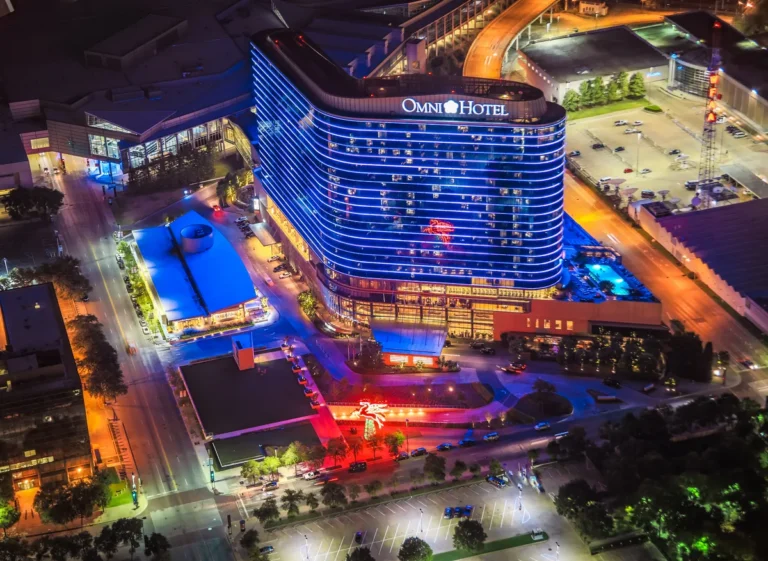
Historic Convention Hotel Destinations USA: The Definitive Editorial Guide
In the landscape of the American meetings industry, the term “convention hotel” often evokes images of sprawling, glass-and-steel monoliths designed for sterile efficiency. However, a significant subset of the market—and the one that consistently commands the highest degree of attendee loyalty and brand prestige—is comprised of properties that predate the modern concept of a “MICE” (Meetings, Incentives, Conferences, and Exhibitions) facility. These locations are not merely venues; they are repositories of national narrative, architectural preservation, and institutional memory.
For the event strategist, selecting among historic convention hotel destinations usa involves a complex trade-off between the charm of 19th-century aesthetics and the rigorous demands of 21st-century technology. The challenge of the modern planner is to harness the “Aura of Permanence” these buildings provide while mitigating the logistical constraints inherent in aging infrastructure.
This editorial reference explores the systemic evolution of these landmarks, providing a definitive framework for evaluating their suitability for high-stakes gatherings. We move beyond the “Heritage Tourism” surface to analyze the operational realities of hosting a modern convention within a National Historic Landmark. By understanding the historical pressures that shaped these destinations, an organizer can better navigate the unique challenges of “Rigging in a Ballroom with 100-Year-Old Plaster” or “Scaling Bandwidth in a Stone-Walled Fortress.”
Understanding “historic convention hotel destinations usa”
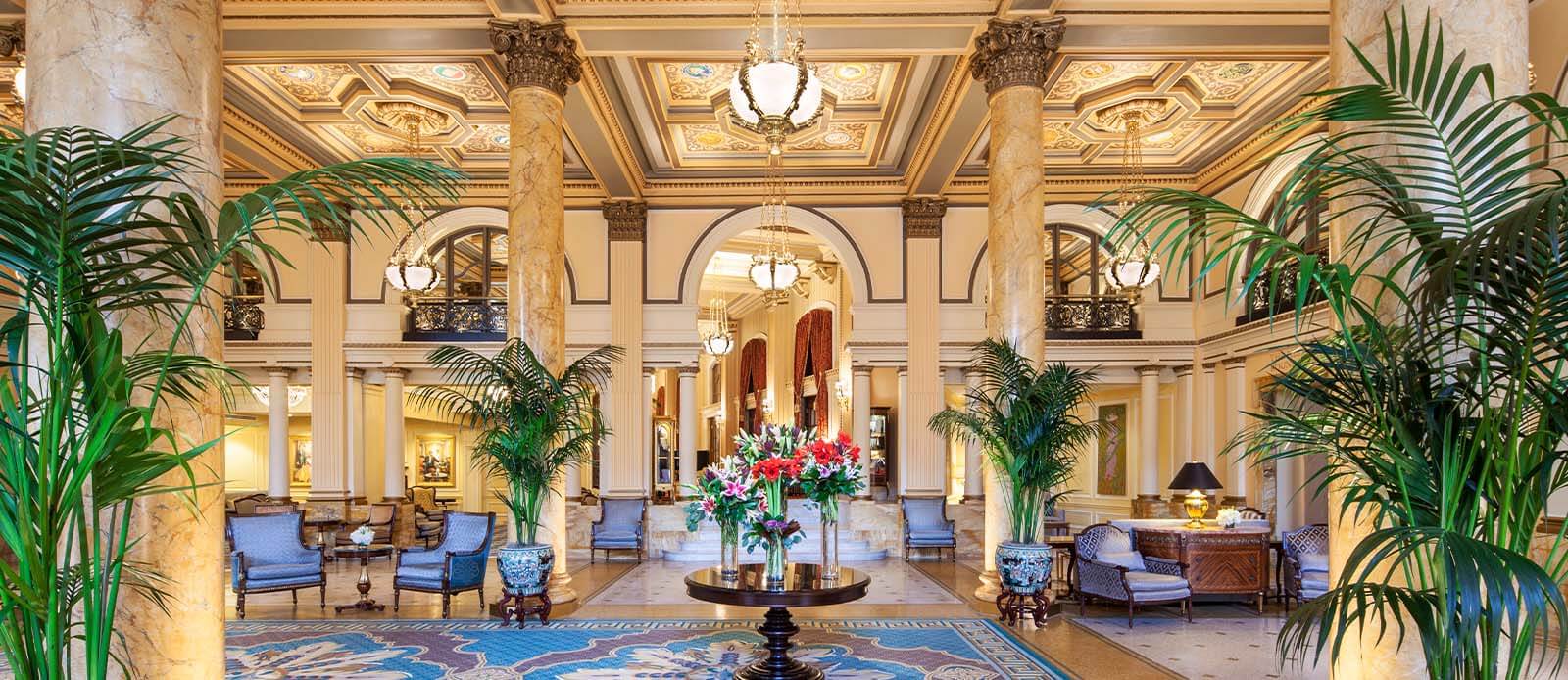
To effectively evaluate historic convention hotel destinations usa, one must distinguish between “Period-Themed” hotels and “Inherently Historic” assets. A common misunderstanding in the procurement process is the assumption that any hotel with a brick facade or a “Classic” nameplate carries historical weight. These properties are subject to strict preservation mandates that govern everything from window glass composition to the “Reversibility” of technical installations.
From a multi-perspective view, a historic destination serves different masters. For the Marketing Director, the history is a “Storytelling Asset”—a way to differentiate an annual meeting from a sea of generic hotel ballrooms. For the Production Manager, however, the history is a “Logistical Constraint.” The very features that provide charm—massive granite pillars, ornate crown molding, and high-velocity steam heat—can interfere with signal paths, sightlines, and climate control. The risk of oversimplification lies in assuming that “History” and “High-Tech” are mutually exclusive.
The strategic value of a historic venue is its “Contextual Gravitas.” When a group meets at the Willard InterContinental in D.C., this “Residual Prestige” can significantly drive attendee registration numbers, particularly for associations and legacy industries where tradition is a core value. However, the planner must audit the facility’s “Adaptive Readiness”—its ability to hide modern utilities within ancient architecture.
Deep Contextual Background: From Public Houses to Gilded Palaces
In the late 18th century, “Public Houses” like the Omni Homestead Resort (est. 1766) served as rudimentary meeting points for travelers “taking the waters.” These were the first true “Destination Resorts,” where the environment was the primary draw, and the hospitality was a byproduct of the geography.
The mid-19th century introduced the “Grand Hotel” era, fueled by the Industrial Revolution and the railroad. These were among the first buildings in the world to feature electric lighting and elevators, making them the “Silicon Valleys” of their day. They weren’t just hotels; they were testing grounds for the technologies that would eventually define modern life.
In the early 20th century, the “Urban Pillar” emerged. Properties like the Waldorf Astoria in New York and the Blackstone in Chicago became the “Smoke-Filled Rooms” of American politics. The “Industrialization of the Meeting” began here, as hotels moved from being passive hosts to active providers of specialized convention services. Understanding this history is vital for the modern planner, as the “Layout Logic” of these rooms still dictates how a 2026 breakout session will flow.
Conceptual Frameworks: The Preservation-Performance Matrix
Planners should utilize these three mental models when auditing a historic property for a modern convention.
1. The “Box-in-Box” Principle
This framework, often used by restoration architects, evaluates how modern technology is “inserted” into historic fabric. A “High-Performance” historic hotel is one where the technical infrastructure (LED walls, speakers, HVAC) is self-supported and does not touch the original plaster or woodwork. If a venue requires you to “Tape cables to the marble,” it fails this framework.
2. The “Legacy-to-Utility” Ratio
This model measures the trade-off between the hotel’s “Story” and its “Speed.” A 100-year-old hotel with a beautiful lobby but only two small, slow elevators has a poor ratio for a high-velocity conference. The goal is to find properties where the “Legacy” (the architecture) enhances the “Utility” (the ease of movement) rather than hindering it.
3. The “Atmospheric Integrity” Model
This framework audits whether modern additions have “Diluted” the historic soul of the building. A historic hotel that has been “Modernized” with generic grey carpet and fluorescent lighting loses its competitive advantage. The best destinations are those that practice “Invisible Modernization”—hiding 10-gigabit fiber behind mahogany paneling.
Key Categories: Grand Resorts, Urban Landmarks, and Industrial Reimagining
Selecting a destination requires matching the “Archetype” of the hotel to the “Identity” of the group.
| Category | Typical Architecture | Key Advantage | Logistics Challenge |
| Gilded Age Resorts | Queen Anne / Victorian | Total “Immersive” bubble | Remote access/Shipping |
| Urban Powerhouses | Beaux-Arts / Neoclassical | Proximity to “Power Centers” | Small loading docks |
| Mountain Manors | Arts & Crafts / Stone | High “Serenity” factor | Temperature swings |
| Art Deco Skyscrapers | Streamline Moderne | Centralized “Vertical” flow | Limited ceiling heights |
| Industrial Reimagining | Brick / Timber / Steel | “Edgy” / Modern aesthetic | Acoustic echo/Reverb |
| Colonial Federalists | Symmetry / Red Brick | Formal / Academic feel | Small breakout rooms |
Decision Logic: The “Vibe-to-Volume” Filter
When exploring historic convention hotel destinations USA, the “Volume” (number of attendees) must dictate the “Vibe.” Conversely, a 50-person board meeting in a Gilded Age ballroom will feel “Lost in Space.”
Detailed Real-World Scenarios
Scenario 1: The “Rigging” Conflict
A tech company wants to hang a 40-foot LED wall in a historic ballroom with a “Fragile” ceiling.
-
The Constraint: The ceiling is hand-painted plaster from 1912. No rigging points are allowed.
-
The Solution: Use a “Ground-Supported” truss system that is “Draped” to match the room’s color palette.
-
Result: The “Historic Integrity” is preserved, while the “Digital Impact” is achieved.
Scenario 2: The “Bandwidth” Barrier
An e-sports convention chooses a historic mountain resort with 2-foot-thick stone walls.
-
The Constraint: Wi-Fi signals cannot penetrate the stone between rooms.
-
The Failure Mode: Relying on the hotel’s “Standard” Wi-Fi.
-
The Mitigation: Running “Tactical Fiber” along the baseboards to create a dedicated, hard-wired network for the duration of the event.
Planning, Cost, and Resource Dynamics
Historic properties often carry a “Premium” price tag, not just for the room rate, but for the “Specialized Labor” required to work within them.
Range-Based Resource Dynamics Table (3-Day Event, 300 People)
| Expense Pillar | Standard Modern Hotel | Historic Landmark | Reason for Delta |
| Room Rate | $250 – $350 | $350 – $600 | Scarcity & Maintenance |
| AV / Rigging | $15k – $25k | $25k – $45k | Custom ground-supports |
| Internet / IT | $5k – $8k | $10k – $18k | Hard-wiring stone walls |
| Food & Bev | $150 / day | $225 / day | “Heritage” menu sourcing |
The “Maintenance Surcharge”: Many historic properties now include a “Preservation Fee” (often 1-3%) on the final bill.
Tools, Strategies, and Support Systems
To manage a convention in a historic setting, planners should employ “Heritage-Specific” tools.
-
Laser-Scanning (Lidar): Creating a 3D digital twin of the ballroom to ensure that custom stage sets will fit between historic pillars with millimeter precision.
-
Acoustic Modeling Software: Essential for high-ceilinged Beaux-Arts rooms to prevent “Audio Mud” from echoing off marble surfaces.
-
The “Historian-on-Call”: Many top-tier historic hotels (like the Davenport in Spokane) employ a staff historian. Use them to craft “Historical Trivia” for the event app to increase engagement.
-
“Non-Invasive” Power Ties: Using temporary “Power Distro” boxes that plug into existing high-voltage laundry or kitchen circuits to avoid drilling into walls.
-
Climate-Control “Buffers”: Deploying portable “Spot-Coolers” in breakout rooms that were originally designed as 1920s sitting rooms and lack modern CFM (Cubic Feet per Minute) airflow.
-
“White-Glove” Load-In Protocols: Specialized requirements for drayage teams (e.g., Masonite flooring to protect 100-year-old parquetry).
Risk Landscape and Failure Modes
The “Historic Aura” can quickly turn into a “Logistical Nightmare” if these failure modes are not anticipated.
-
The “Power Pop” Failure: Trying to run a modern AV rig on 1950s-era electrical panels. A “Top” planner always requests a “Load Test” before the general session.
-
The “Accessibility” Trap: Historic hotels are often “Grandfathered” into ADA regulations, meaning they may have “Step-ups” or narrow corridors that are difficult for attendees with mobility challenges.
-
The “Acoustic Echo” Risk: Marble floors and plaster ceilings look beautiful, but create a “Reverb” that makes speeches unintelligible. This requires “Drapery” and “Directed Audio” (Line Arrays).
Governance, Maintenance, and Long-Term Adaptation
A successful partnership with a historic hotel requires a “Guardianship” mentality.
-
The “Pre-Walk” Damage Log: Take high-res photos of every “Existing Crack” or “Scuff” in the historic molding before the AV crew arrives.
-
Governance Checklist:
-
[ ] Verification of “Weight Caps” for the service elevators (often smaller in historic hotels).
-
[ ] Audit of “Loading Dock” height (modern 53-foot trailers often cannot fit in 1920s docks).
-
[ ] Confirmation of “Climate Stability” (Can the AC handle a 500-person body-heat load in July?).
-
[ ] Review of “Fire Safety” (Ensure that modern pyro or fog machines won’t trigger ancient “Heat Sensors”).
-
Measurement, Tracking, and Evaluation
How do you measure the “Historic ROI”?
-
Leading Indicator: “Social Media Impressions per Attendee.” Historic hotels are “Instagrammable.” If your “Selfie Count” is 50% higher than last year’s modern hotel, the venue is driving brand awareness.
-
Quantitative Metric: “Attendee Retention Rate.” Groups that meet in historic “Bucket List” destinations often see a 10-15% increase in year-over-year loyalty.
-
Qualitative Signal: “The ‘Sense of Place’ Survey.” Asking attendees if the venue felt “Meaningful” or just “Functional.”
Common Misconceptions and Oversimplifications
-
“Historic means old and dirty.” Correction: Top-tier historic convention hotels spend millions annually on “Preventive Maintenance.” They are often cleaner than “Budget” modern hotels.
-
“You can’t get good Wi-Fi in an old hotel.” Correction: You can, but it requires “Density Planning.” It’s an engineering challenge, not a building impossibility.
-
“There are no large historic hotels.” Correction: The Hotel del Coronado has over 700 rooms and nearly 70,000 square feet of meeting space.
-
“Historic hotels aren’t sustainable.” Correction: “Preservation is the ultimate green.” Retrofitting an existing building is almost always more sustainable than building a new one from scratch.
-
“They are only for formal groups.” Correction: Tech companies love the “Brutalism” or “Industrial Chic” of repurposed historic warehouses.
-
“The food is dated.” Correction: Most historic hotels leverage their “Heritage” for “Farm-to-Table” or “Heirloom” culinary programs that are highly trendy.
-
“It’s too expensive for my non-profit.” Correction: Mid-week or “Shoulder Season” rates at historic resorts can be surprisingly competitive.
-
“The elevators will fail.” Correction: Most historic hotels have “Modern Internals” inside “Historic Cabs.”
Ethical and Practical Considerations
In the context of historic convention hotel destinations USA, there is an ethical dimension to “Cultural Stewardship.” By choosing a historic venue, an organization is providing the financial capital necessary to preserve the nation’s architectural heritage. Practically, this also means respecting the “Local Community.” Many of these hotels are the “Center of the Universe” for their small towns. A convention that disrupts the “Local Flow” without engaging the community (e.g., using local vendors or tours) misses an opportunity for “Contextual Enrichment.”
Synthesis and Editorial Conclusion
The choice of a historic convention destination is a rejection of the “Commoditization” of the meeting space. It is a decision to ground an event in something larger than a corporate PowerPoint—to place it within the timeline of American history. While the logistical hurdles are real, they are solvable through “Advanced Production Planning” and “Infrastructure Auditing.”
As the industry moves toward “Experience-Based” events, the demand for these landmarks will only increase. The most successful planners of the next decade will be those who can speak the language of “Lumen Counts” and “Plaster Restoration” with equal fluency.