How to Manage Convention Hotel Staff Requirements: An Editorial Guide
The orchestration of human capital within a convention hotel represents the most volatile variable in the event production equation. While architectural features remain static and technical infrastructure is largely predictable, the labor force required to animate a large-scale summit is subject to the whims of shifting schedules, regional labor markets, and the inherent unpredictability of human behavior. For the professional strategist, the challenge lies in moving beyond a simple “headcount” mentality and toward a sophisticated “Capability Modeling” approach. A convention is not serviced by a generic pool of workers; it is supported by a highly specialized ecosystem of hospitality professionals whose efficiency determines the ultimate ROI of the gathering.
In the current economic climate, characterized by fluctuating labor participation rates and a premium on specialized skill sets, the hotel-client relationship has evolved into a joint venture in risk management. The venue must maintain a skeleton crew for daily operations while possessing the “Elasticity” to scale up by hundreds of staff members for a 72-hour window. This sudden surge in labor creates immense pressure on the hotel’s internal training systems and quality control mechanisms. If the delta between the “Core Staff” and the “Event Staff” is too wide, the brand experience suffers, leading to the “Service Gaps” that frequently plague otherwise well-planned conventions.
Managing these requirements necessitates a forensic understanding of the “Back-of-House” (BOH) mechanics that dictate staff deployment. This includes the interplay between union regulations, the nuances of “Banqueting Ratios,” and the psychological impact of “Event Fatigue” on front-line workers. To effectively navigate this landscape, one must treat the hotel staff not as a line-item expense, but as a critical infrastructure asset. The objective is to achieve a state of “Logistical Synchronization” where the staff’s movements are as precisely timed as the keynote speaker’s stage cues.
Understanding “how to manage convention hotel staff requirements”
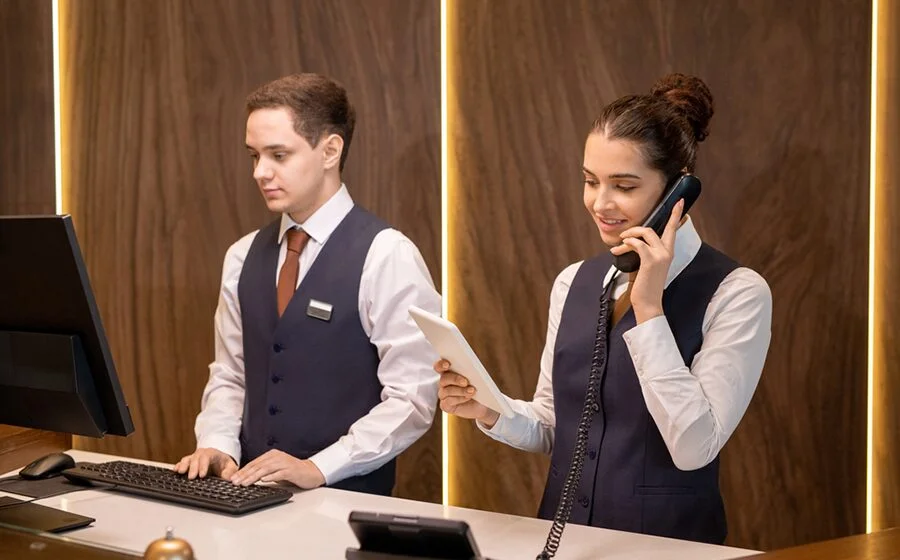
To truly master how to manage convention hotel staff requirements, one must first dismantle the oversimplification that “more staff equals better service.” In the context of a high-density convention, over-staffing can be as detrimental as under-staffing, creating physical congestion in service corridors and diluting the clarity of the command chain. The goal is “Staffing Precision”—the ability to align the specific skills of the workforce with the specific “Friction Points” of the event schedule. A common misunderstanding among planners is the assumption that the hotel’s sales manager has direct control over the “Housekeeping” or “Banquet” departments. In reality, these are often siloed operations with their own internal labor contracts and “Minimum Call” requirements.
From a multi-perspective view, managing staff requirements is an exercise in “Stakeholder Calibration.” For the Event Organizer, the priority is the “Ratio of Visibility”—ensuring there is always a staff member within 30 feet of an attendee. the Hotel General Manager, the priority is “Labor Efficiency”—minimizing overtime while meeting the Service Level Agreements (SLAs) defined in the contract. For the Staff Member, the priority is “Task Clarity”—knowing exactly when their shift ends and who their immediate supervisor is during the chaos of a 5,000-person lunch flip.
Oversimplification risks often manifest in the “Ratios” provided in standard contracts. A hotel might promise a 1:20 server-to-guest ratio for a gala dinner. However, if that ratio does not account for the “Busser” or “Runner” support staff, the servers will spend 40% of their time in the kitchen rather than on the floor. Comparing venues based on their “Support-to-Service” ratio provides a far more accurate indicator of actual performance than the headline server count.
The Evolution of Hospitality Labor: From Service to Systems
The history of convention staffing is a transition from “Domestic Service” to “Industrial Logistics.” In the early 20th century, the grand hotels of Europe and the United States operated on a “Personal Butler” model. Staffing was abundant, and the “Service” was defined by individual attention. Labor was inexpensive, and the hierarchy was rigid and permanent.
The mid-century “Modernist” era saw the rise of the “Standardized Brand.” As hotel chains grew, staffing became a matter of “SOPs” (Standard Operating Procedures). This era introduced the “Task-Based” worker—the person who only does “Set-up” or only does “Registration.” While this increased efficiency, it created the “Bystander Effect,” where staff members would ignore problems that fell outside their specific job description.
Today, we are in the era of “Agile Hospitality.” The modern convention hotel staff must be “Cross-Functional.” A banquet server must understand the basics of the “Mobile App” to assist an attendee with wayfinding, and a front-desk agent must be able to troubleshoot basic Wi-Fi issues. This shift requires a continuous training cycle and a move away from “Siloed Labor.” The hotel is no longer a collection of departments; it is a unified “Service Grid” that must adapt in real-time to the data-driven needs of the modern attendee.
Conceptual Frameworks for Labor Auditing
To audit a facility’s staffing readiness with analytical depth, use these three core mental models.
1. The “Cognitive Load” Framework
This framework evaluates the complexity of the tasks assigned to the staff. In a product launch or high-stakes summit, the staff is under extreme pressure. A “Top” property reduces the staff’s “Cognitive Load” by providing clear, digital “Run-of-Show” documents and localized “Command Nodes.” If a staff member has to walk 500 yards to find a manager to answer a question, the system has failed.
2. The “Elasticity-to-Attrition” Ratio
This model measures the hotel’s “Reserves.” In any 3-day convention, there will be an “Attrition Rate” of staff due to illness or fatigue (typically 5-8%). An elite facility maintains a “Standby Pool” of pre-trained temporary staff who can be activated within 60 minutes. This framework audits the “Depth of the Bench” rather than the starting lineup.
3. The “Service-Path” Topology
This model analyzes the physical movement of the staff. A hall with poorly designed service doors requires staff to cross the path of attendees to deliver food. This creates “Logistical Friction.” A premier facility is one where the “Service Topology” allows staff to appear and disappear like “Theater Techs,” maintaining the “Atmosphere” of the event without being seen.
Key Categories and Staffing Variations
The “Best” staffing model is dependent on the “Event Velocity.”
Decision Logic: The “Visibility-to-Utility” Filter
When determining how to manage convention hotel staff requirements, planners should prioritize “High-Visibility” staff (Registration, Concierge) and “High-Utility” staff (Technicians, Cleanup) while minimizing the “Middle Management” layer, which often creates communication bottlenecks.
Detailed Real-World Scenarios
Scenario 1: The “Registration Bottleneck”
A 3,000-person conference has an 8:00 AM start. 80% of attendees arrive at the hotel at the same time.
-
The Constraint: The hotel has only 4 permanent registration kiosks.
-
The Failure Mode: The line stretches out the door, delaying the opening keynote by 45 minutes.
-
The Mitigation: A venue with “Staffing Elasticity” converts its “Bell Desk” and “Concierge” staff into temporary registration agents for the first 90 minutes of the event.
Scenario 2: The “Room Flip” Crisis
A ballroom must transition from a “Theater-Style” keynote to a “Rounds-of-10” lunch in 60 minutes.
-
The Constraint: The room requires 300 tables to be set with linens and silverware.
-
The Failure Mode: The hotel uses only its “Morning Shift” banquet staff, who are already fatigued.
-
The Solution: A “Double-Shift Overlap” where the afternoon crew arrives 2 hours early specifically for the “Heavy Lift” of the flip.
Planning, Cost, and Resource Dynamics
The “Sticker Price” of labor is often obscured by “Service Charges” and “Minimums.”
Range-Based Resource Dynamics Table
The “Opportunity Cost” of Under-Staffing: If you save $10,000 on “Cleanup Crews,” the opportunity cost is the $100,000 you lose in “Member Satisfaction” when attendees find trash from the previous session at their seats. Labor is the “Maintenance of Brand Equity.”
Tools, Strategies, and Support Systems
To manage the staff requirements of an elite convention, the strategist must employ a “Digital Overlay.”
-
RTLS (Real-Time Location Systems): Using Bluetooth badges for staff to track their movement patterns and identify “Dead Zones” where service is lagging.
-
Dynamic Heat-Mapping: Using sensors to identify where attendees are clustering, allowing managers to move “Wayfinding Staff” in real-time.
-
The “Staff-Only” Mobile App: A dedicated channel for the event’s “Internal Communication,” separate from the attendee app, for “Immediate Response” triggers.
-
“Scenario-Based” Micro-Training: Providing staff with 3-minute video “Refreshers” on the specific needs of the incoming group (e.g., “This group is 100% Vegan”).
-
Biometric Time-Clocks: Ensuring that the “Staff Counts” billed to the client are accurate to the minute.
-
Zonal Management Blocks: Dividing the convention floor into “Sectors,” each with a dedicated “Sovereign Manager” who has the authority to authorize overtime or extra resources without calling the GM.
Risk Landscape and Systemic Resilience
Risk in staffing is a “Chain Reaction.” A failure in the “Dishwashing” department can stop a “Gala Dinner” just as effectively as a failure in the “Kitchen.”
-
The “Single-Point” Supervisor Failure: If the “Banquet Captain” is the only person who knows the seating chart and they go home sick, the entire evening is at risk.
-
The “Labor Market” Squeeze: Booking a convention during a “City-Wide” event (like a Super Bowl) means the hotel will be using “Level 3” temporary staff who have never stepped foot in the building.
-
The “Fatigue-Induced” Safety Risk: Staff working 16-hour days during the “Load-in” are 4x more likely to damage equipment or injure themselves. “Shift Governance” is a liability requirement.
Governance, Maintenance, and Long-Term Adaptation
A premier staffing model is one that is “Continuously Audited.”
-
The “Post-Con” Labor Reconciliation: Within 72 hours of the event, the planner should receive a “Labor Audit” showing exactly how many hours were worked by each department.
-
Governance Checklist:
-
[ ] Verification of “Union Seniority” rules for the specific event dates.
-
[ ] Audit of the “Staff Breakroom” (Happy staff provide better service).
-
[ ] Confirmation of the “Command Chain” (Who is the one person the planner talks to?).
-
[ ] Review of the “Emergency Response” training for all temporary staff.
-
Measurement, Tracking, and Evaluation
ROI in staffing is measured by “Frictionlessness.”
-
Leading Indicator: “The Manager-to-Staff Ratio.” Is there one supervisor for every 10 workers? Any more, and communication breaks down.
-
Quantitative Metric: “Task Completion Velocity.” How many minutes does it take to clear a room of 500 people?
-
Qualitative Signal: “The Staff Sentiment Survey.” Asking the staff after the event: “Did you have the tools you needed to succeed?”
Common Misconceptions and Oversimplifications
-
“Staff are included in the Room Rental.” Correction: Room rental pays for the space. Staffing is almost always an “Add-on” or part of the “Service Charge.”
-
“The Sales Manager is in charge.” Correction: The Sales Manager is a “Conciliator.” The “Director of Operations” is the person who actually allocates the bodies.
-
“Temp staff are a liability.” Correction: Professional “Event Labor” companies often provide better specialized service (e.g., AV techs) than the hotel’s “Generalist” staff.
-
“The ‘Service Charge’ is the tip.” Correction: In many jurisdictions, the hotel keeps 50-70% of the “Service Charge” for administrative costs.
-
“Check-in takes 2 minutes.” Correction: For a group arrival, check-in takes 10-15 minutes per person unless you have “Staffed-up” the lobby.
-
“Cleaning happens at night.” Correction: For a high-density convention, “Restroom Maintenance” must be a 24-hour continuous cycle.
-
“AV Techs can fix the Wi-Fi.” Correction: AV is “Content”; IT is “Connectivity.” They are different staff requirements.
-
“The Chef knows the dietary needs.” Correction: The Chef knows the menu. The “Banquet Captain” is the one who ensures the “Vegan Plate” gets to the right person.
Ethical and Practical Considerations
In the current era, the “Ethical Treatment” of hotel staff is a primary metric for corporate social responsibility (CSR). A best convention hotel for product launches is one that pays its staff a living wage and maintains a safe work environment. Organizations are increasingly auditing the “Labor Practices” of their venues, recognizing that a disgruntled or mistreated workforce is a direct threat to the success of their event. Practically, this means including “Labor Harmony” clauses in the hotel contract, ensuring that the hotel is not in the middle of a labor dispute during the conference dates.
Synthesis and Editorial Conclusion
Managing staff requirements is the “Human Engineering” of a convention. It is the process of turning a collection of individuals into a high-performance machine.
For the planner, mastery in this field is found in “Anticipation.” It is the ability to look at a schedule and see where the “Human Stress” will occur, and to provide the resources to mitigate that stress before it turns into a “Service Failure.” In the end, a hotel is just a building; it is the staff that turns it into a “Convention Experience.”