Top High Tech Convention Hotels America: The 2026 Editorial Guide
In the competitive hierarchy of the American meetings industry, a new tier of luxury has emerged that is defined not by the thread count of the linens or the provenance of the lobby marble, but by the invisible architecture of its data transmission. For the modern event strategist, the “Grand Ballroom” has been replaced by the “High-Bandwidth Multi-Node Plenary,” where success is measured in bits per second and the latency of a hybrid stream. The search for the top high tech convention hotels america is no longer a vanity exercise for Silicon Valley giants; it is a fundamental requirement for any organization whose value proposition relies on the seamless integration of physical presence and digital amplification.
As we navigate the middle of this decade, the definition of a “High-Tech” hotel has shifted from the ornamental—such as iPads in guest rooms or robotic luggage carts—to the systemic. A premier facility in 2026 is one that operates as a “Smart Node” within a global communications grid. These properties are characterized by their “Hyper-Converged” infrastructure, where the building’s HVAC, lighting, security, and event technology are managed through a single, AI-orchestrated data layer. This level of integration allows for an “Adaptive Environment” that can respond in real-time to the “Cognitive Load” of a conference, adjusting everything from oxygen levels in a breakout room to the Wi-Fi signal density in a crowded expo hall.
However, the pursuit of technological superiority carries its own set of risks. The “Fragility of Complexity” means that the more advanced a hotel’s systems become, the more catastrophic a single point of failure can be. For the attendee, the “Friction” of a malfunctioning mobile key or a non-responsive digital concierge can quickly negate the “Aura of Innovation” the hotel seeks to project.
Understanding “top high tech convention hotels america”
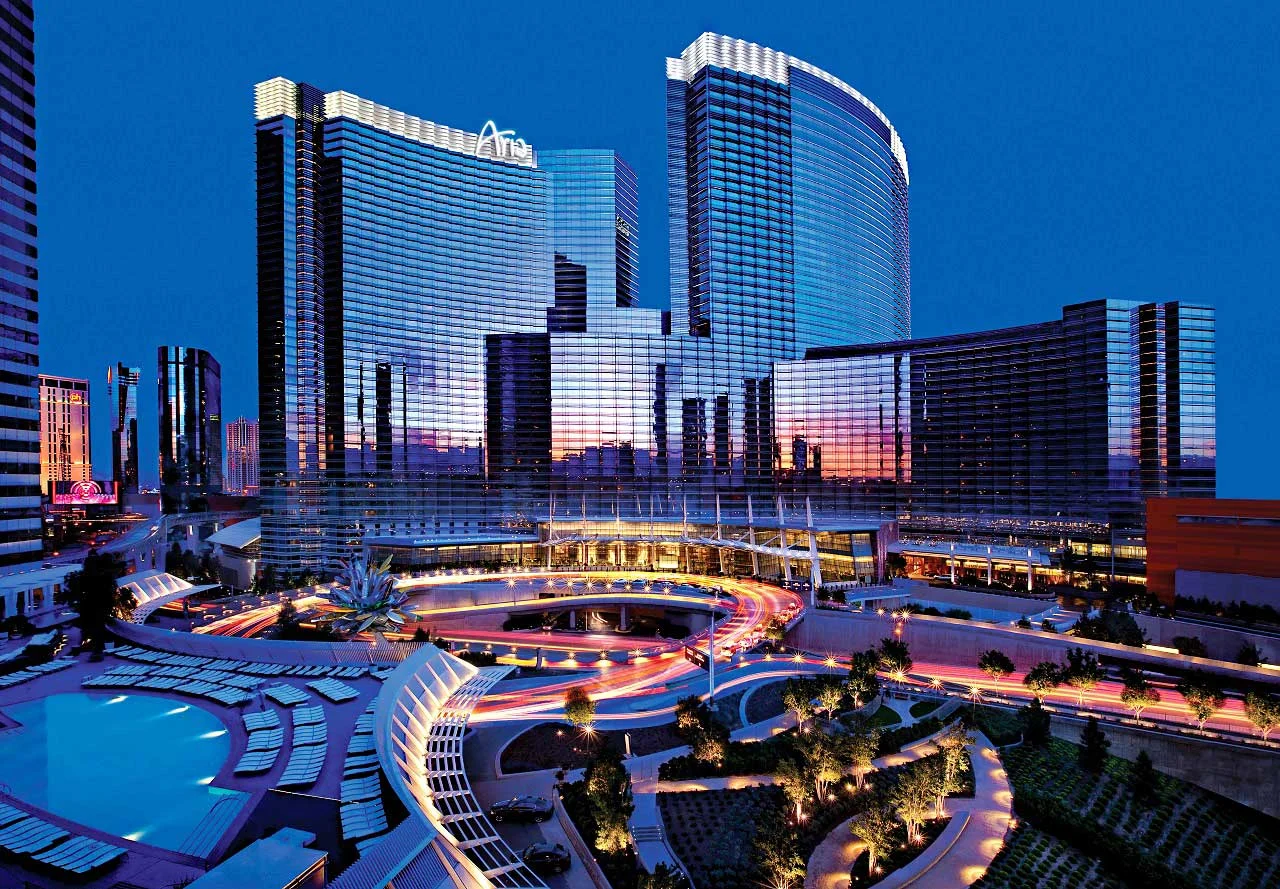
To effectively categorize the top high tech convention hotels america, one must move beyond the marketing brochure and audit the “Foundation Layers” of the property. A common misunderstanding in site selection is conflating “AV Capability” with “Building Technology.” A hotel may possess a state-of-the-art theater with 4K laser projection, yet still be crippled by an analog Property Management System (PMS) that creates bottlenecks at check-in.
From a multi-perspective view, the “High-Tech” label serves different objectives:
-
For the Organizer: Technology is a “Utility of Scale,” allowing 10,000 people to move, eat, and learn without the friction of queues or dead zones.
-
For the Attendee: Technology is an “Experience Multiplier,” providing personalized schedules, real-time translation, and frictionless networking through “Smart Badges.”
-
For the Venue: Technology is an “Operational Optimizer,” using IoT sensors to reduce energy waste and AI to predict staffing surges before they occur.
Oversimplification risks often manifest in the “Bandwidth Guarantee.” A hotel might promise “Gigabit Wi-Fi,” but if that bandwidth is not “Segmented” and “Burst-Capable,” it will collapse the moment 2,000 developers open their laptops simultaneously. Evaluating a venue requires a “Stress-Test” mentality: asking not just what the peak capacity is, but how the system recovers from a 30% “Signal-to-Noise” interference in a high-density environment.
The Evolution of the Digital Venue: From Wi-Fi to Hyper-Convergence
The history of hotel technology is a transition from “Guest Convenience” to “Strategic Infrastructure.” In the late 1990s and early 2000s, “High-Tech” meant a wired Ethernet port at the desk and a business center with a fax machine. The “Wi-Fi Revolution” of the 2010s shifted the focus to the “Lobby as an Office,” where connectivity became a basic human right, akin to water or electricity.
By 2020, the “Hybrid Surge” forced hotels to become “Broadcast Studios.” The most advanced properties began installing dedicated “Fiber Backbones” and permanent “Streaming Hubs” to accommodate the sudden need for high-quality video out-bound from every meeting room. This era saw the rise of “Virtual Site Tours” and “Digital Twins,” allowing planners to build their entire event in a VR environment before setting foot on the property.
Today, in 2026, we have entered the era of “Hyper-Convergence.” The hotel is no longer a building with some tech; it is a “Sensing Organism.” The top high tech convention hotels america are now implementing “Edge Computing,” where data is processed locally within the hotel’s network rather than sent to the cloud. This reduces latency to near-zero, enabling real-time AR (Augmented Reality) navigation and “Instantaneous Biometric Verification” that allows an attendee to walk from the airport shuttle straight to their session without ever stopping at a front desk.
Conceptual Frameworks: The “ArchiTechnology” Matrix
Planners should utilize these four mental models when auditing a facility’s technological “Maturity.”
1. The “Signal-to-Space” Density Model
This framework evaluates the “Ubiquity” of the network. A “Grade A” facility has “Redundant Access Points” (APs) every 15 feet, hidden within the architectural fabric. It measures the “Drop-off Rate” when moving between vertical levels or through “Lead-Glass” partitions. If a hotel has “Dead Spots” in its elevators or stairwells, it fails the “Seamless Continuity” requirement.
2. The “Biometric Throughput” Framework
This model measures the efficiency of human movement. It calculates the “Seconds per Interaction” for check-in, room access, and meal vouchers. In a high-tech hotel, this number should be approaching zero. The “Biometric Layer” (facial or palm recognition) should act as a “Passive Credential,” removing the need for physical badges or keys.
3. The “Thermal-Cognitive” Feedback Loop
This framework audits the “Internal Environment.” High-density sessions increase CO2 levels, which leads to “Attendee Fatigue” and decreased “Information Retention.” A truly high-tech venue uses IoT sensors to detect “Occupancy Spikes” and automatically increases fresh air intake and lowers the temperature before the room becomes uncomfortable.
4. The “Cyber-Physical Convergence” Audit
This model analyzes the security of the building’s “Industrial Control Systems” (ICS). It asks: Is the hotel’s Wi-Fi network physically and logically separated from the elevators and the fire suppression system? As hotels become more connected, they become larger targets for “Ransomware” that can physically lock guests out of their rooms.
Key Categories of Tech-Forward Properties
The “High-Tech” experience varies significantly depending on the “Urban Density” and “Brand Philosophy” of the destination.
| Category | Primary Tech Driver | Core Trade-off | Ideal For |
| The “Digital Fortress” | Cyber-security / Private Fiber | High “On-site” cost | Finance / Government / Defense |
| The “Smart Studio” | 8K LED / Broadcast Hubs | Requires specialized labor | Media / Product Launches |
| The “IoT Ecosystem” | Smart Rooms / Biometrics | “Privacy” concerns | Tech Summits / Developer Cons |
| The “Green-Tech” Node | Sustainability / Energy AI | Limited “Glitz” | ESG / Climate Summits |
| The “Robotic Concierge” | Automated Service / Delivery | Feels “Impersonal” to some | High-Velocity Expos |
| The “Hybrid Hub” | Permanent VR/AR Infra | “Virtual” attendees feel remote | Global Research / Pharma |
Decision Logic: The “Latency vs. Luxury” Filter
When selecting among the top high tech convention hotels america, planners must decide if they are buying “Production Value” (the stage lights) or “Operational Value” (the ease of flow). A Las Vegas mega-resort offers unmatched production scale but can suffer from “Logistical Latency” due to its sheer size. A boutique “Tech Hub” in Austin or Seattle may offer higher “System Speed” but lacks the “Keynote Volume.”
Detailed Real-World Scenarios
Scenario 1: The “Bandwidth Blackout”
A 5,000-person AI summit involves attendees running local LLMs (Large Language Models) on their laptops during workshops.
-
The Constraint: Traditional hotel Wi-Fi backhauls are designed for “Consumption” (Netflix), not “Production” (Data Uploads).
-
The Failure Mode: The network saturates in the first 10 minutes, crashing the event’s mobile app.
-
The High-Tech Solution: A property with “SD-WAN” (Software-Defined Wide Area Network) that can “Burst” into un-utilized dark fiber capacity, providing a dedicated 10Gbps symmetric pipe for the duration of the session.
Scenario 2: The “Biometric Bottleneck”
A medical conference requires “Session Tracking” for CME (Continuing Medical Education) credits.
-
The Constraint: Traditional “Badge Scanning” at the door creates long lines and requires 20 temporary staff.
-
The Solution: Using “Overhead LIDAR” and “Facial Recognition Nodes” to automatically track “Dwell Time” in each room.
-
The Second-Order Effect: The data provides the organizer with a “Heat Map” of attendee interest, allowing them to adjust the content of the “Closing Plenary” in real-time.
Planning, Cost, and Resource Dynamics
The “Tech Surcharge” in a convention hotel is rarely a single line item; it is a “Compounding Variable” that affects labor, insurance, and power consumption.
Range-Based High-Tech Resource Table (Per Day)
| Resource Pillar | Standard Hotel | High-Tech Benchmark | The “Hidden” Variable |
| Bandwidth (1Gbps Ded.) | $2,500 – $4,500 | $1,200 – $2,000 | High-tech hotels have lower internal costs |
| Rigging Points (Per) | $150 – $250 | $350 – $550 | Automated electric hoists increase cost |
| Power (Per 20amp) | $100 – $180 | Included in package | Smart buildings track “Real-Usage” |
| Technical Support (Hr) | $125 – $225 | $250 – $450 | “Systems Engineers” vs. “AV Techs” |
The “Opportunity Cost” of Lag: If a high-stakes keynote stream lags for 15 seconds, the “Brand Damage” to a tech sponsor is estimated at 10x the cost of the entire hotel contract. High-tech venues are essentially “Insurance Policies” for brand reputation.
Tools, Strategies, and Support Systems
Planners must use “Stackable Strategies” to leverage a hotel’s high-tech assets effectively.
-
Digital Twin Pre-Viz: Using the hotel’s “BIM” (Building Information Modeling) data to run virtual “Pedestrian Simulations” to identify where bottlenecks will form.
-
API Integration Layer: Ensuring the hotel’s “Property Management System” has an “Open API” that can feed real-time “Room Ready” notifications directly to the event app.
-
Localized Mesh Networks: Using portable “Mesh Nodes” in outdoor spaces or “dead-zone” corridors to maintain a “Continuous Data Umbrella.”
-
AI-Powered Translation Earbuds: Leveraging the hotel’s “Ultra-Low Latency” Wi-Fi to provide simultaneous translation for 50+ languages without the need for sound booths.
-
Smart Energy Monitoring: Using the hotel’s “ESG Dashboard” to provide a “Real-Time Carbon Footprint” report to the client, a requirement for many modern corporate events.
-
“Dark Fiber” Sourcing: For high-security events, bringing in a “Dedicated Dark Fiber” circuit that completely bypasses the hotel’s public network.
-
Dynamic Digital Signage: Replacing all static posters with “OLED Wayfinding” that changes language and direction based on the “Attendee Density” sensed by the floor sensors.
Risk Landscape and Cyber-Physical Failure Modes
The “High-Tech” venue is a “High-Attack-Surface” venue.
-
The “Elevator Ransomware”: A cyber-attack on the hotel’s “Building Automation System” (BAS) that halts all elevators during a room flip.
-
The “Spectrum Saturation”: When 5,000 Bluetooth devices (watches, headphones, phones) interfere with the “Wireless Mic” frequencies.
-
The “Data Privacy Leak”: Inadvertently capturing “Biometric Data” in a jurisdiction with strict “GDPR” or “CCPA” equivalent laws without proper “Consent Walls.”
Governance, Maintenance, and Long-Term Adaptation
A high-tech venue requires “Continuous Commissioning”—it is never “Finished.”
-
The “Quarterly Network Audit”: Evaluating the “Signal Degradation” of access points as the building settles or as new “Interference Sources” (like nearby construction) emerge.
-
Governance Checklist:
-
[ ] Verification of “Network Segmentation” (Are the cameras on the same subnet as the Wi-Fi?).
-
[ ] Audit of “Battery Backup” (How long can the Wi-Fi stay up during a city-wide power outage?).
-
[ ] Review of “Vendor Access” (Who has the ‘Master Password’ to the building’s lighting controls?).
-
[ ] Confirmation of “Data Retention Policies” (When is the attendee’s facial scan deleted?).
-
Measurement, Tracking, and Evaluation
High-tech success is measured by “Data Fidelity.”
-
Leading Indicator: “The Latency Floor.” Is the ping time to the local gateway under 5ms consistently across the property?
-
Quantitative Metric: “Session Sentiment-per-Second.” Using “Anonymized Facial Analysis” to track the “Engagement Level” of an audience during a keynote.
-
Qualitative Signal: “The ‘Friction’ Index.” Tracking the number of “Help Desk” tickets related to “Connectivity” or “App Access.”
Common Misconceptions and Oversimplifications
-
“More access points mean better Wi-Fi.” Correction: Too many APs create “Channel Interference.” Optimization is an engineering task, not a hardware count.
-
“AI will replace the concierge.” Correction: AI handles the “Transactional” (Where is the gym?); humans handle the “Relational” (Can you help me with a last-minute VIP request?).
-
“High-tech hotels are less personal.” Correction: When technology handles the “Data Entry,” staff are freed to provide “High-Touch” hospitality.
-
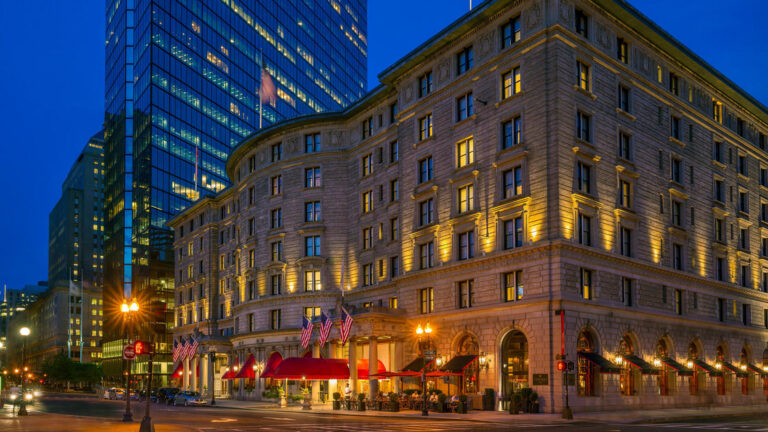
“You can’t have tech in a historic hotel.” Correction: Many of the top high tech convention hotels america are historic landmarks with “Invisible” fiber retrofits.
-
“I don’t need a tech team if the hotel is high-tech.” Correction: You need a “Systems Orchestrator” to bridge the gap between your needs and the hotel’s capabilities.
-
“Smart rooms are just for toys.” Correction: Smart rooms are “Energy Management Nodes” that significantly reduce the “Environmental Cost” of the convention.
-
“Cyber-security is the hotel’s problem.” Correction: It is a “Shared Responsibility” model. Your event data is your liability.
-
“Fiber is fiber.” Correction: “Single-Mode” vs. “Multi-Mode” and the “Redundancy Paths” determine the actual resilience of the connection.
Ethical and Practical Considerations
The deployment of technology in hotels raises significant “Privacy vs. Personalization” ethical questions. The top high tech convention hotels america must balance the “Efficiency of Surveillance” (knowing where everyone is) with the “Right to Disconnect.” From a practical standpoint, this means implementing “Opt-In” biometric systems and ensuring that “Data Sovereignty” remains with the attendee. Furthermore, as the “Digital Divide” grows, high-tech venues must ensure they remain accessible to attendees who may not have the latest devices or the “Technical Literacy” to navigate a fully autonomous building.
Synthesis and Editorial Conclusion
The ascent of the high-tech convention hotel represents the “Digital Maturity” of the hospitality industry. These properties are no longer just places to sleep; they are “Accelerators of Innovation” that provide the infrastructure for the “Global Knowledge Economy.” However, the true value of technology in a hotel is measured by its “Transparency”—it is most successful when it is so reliable and so intuitive that the attendee forgets it exists.
For the planner, the challenge is to move from “Purchasing Features” to “Architecting Outcomes.” The most successful conventions of 2026 will not be those with the most “Gadgets,” but those that leverage the “Invisible Grid” of a high-tech hotel to create moments of “Uninterrupted Human Connection.” In the end, technology is not the destination; it is the “High-Speed Rail” that carries the group toward its collective goal.