Convention Hotel Registration Area Ideas: The Strategic Editorial Guide
In the high-stakes environment of international summits and corporate assemblies, the registration zone is often relegated to a purely functional status—a necessary bottleneck where credentials are exchanged for plastic badges. However, this perspective overlooks the critical psychological role this space plays as the event’s “Primary Threshold.” The registration area is the first physical manifestation of an organization’s brand and the definitive arbiter of the attendee’s “Arrival Momentum.”
Designing an effective entry sequence requires an understanding of “Throughput Mechanics” and “Sensory Calibration.” A convention hotel’s lobby is a contested space, often managing the overlapping flows of hotel guests, transit staff, and conference attendees. Consequently, the registration area must function as a “Sovereign Zone” within the property—a self-contained ecosystem capable of processing thousands of unique data points while simultaneously providing a restorative transition from the stress of travel to the focus of the assembly. This requires more than just furniture and signage; it requires an architectural strategy that accounts for the “Fluid Dynamics” of human movement.
As we look toward the 2026 landscape, the innovations in this sector have moved beyond simple digital kiosks. We are seeing a shift toward “Ambient Intelligence,” where the physical environment itself facilitates the registration process. This editorial analysis moves beyond surface-level aesthetics to explore the structural and systemic mechanics of the elite registration zone. By deconstructing the traditional “desk” model and exploring more integrated convention hotel registration area ideas, we can establish a new standard for attendee integration—one that prioritizes psychological comfort as much as data accuracy.
Understanding “convention hotel registration area ideas”
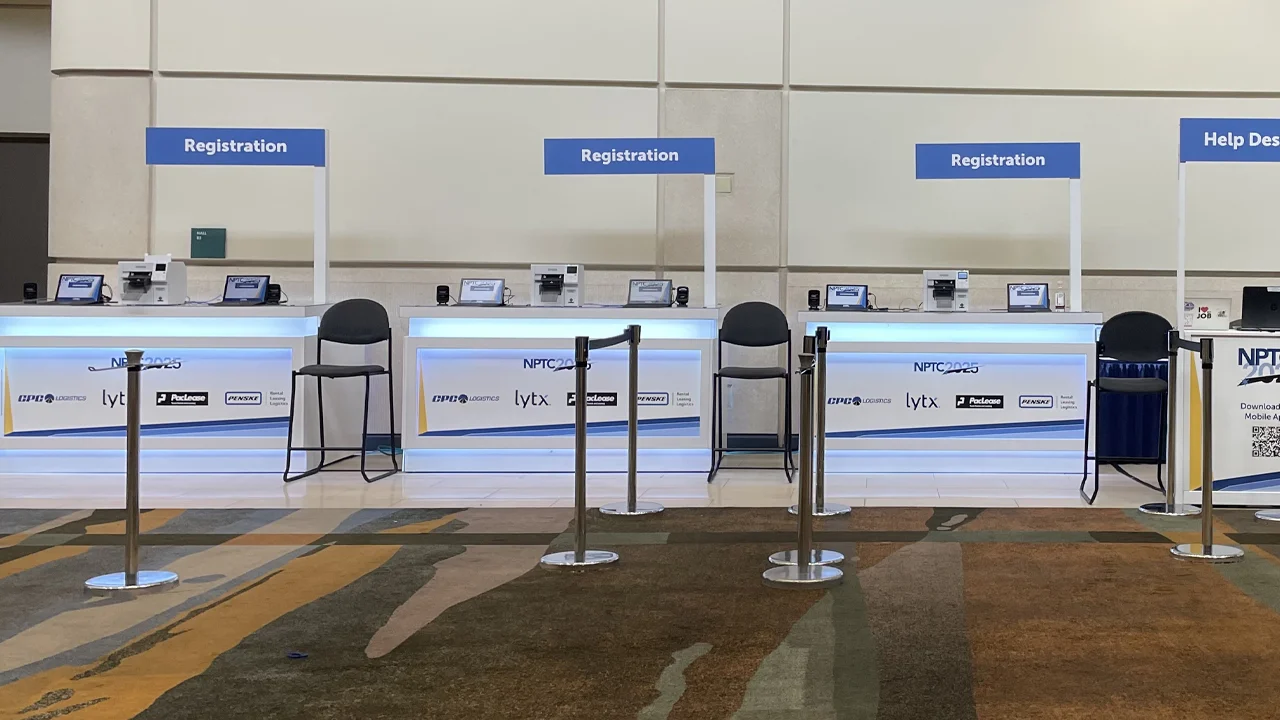
The conceptualization of convention hotel registration area ideas frequently suffers from a “Furniture-First” bias. Planners often begin by selecting counters and linens before they have audited the “Data Velocity” of their group. This involves a multi-perspective audit: the attendee seeks a 60-second transition; the sponsor seeks high-value visibility; and the logistics lead seeks a 100% accurate credentialing audit.
Common misunderstandings in this domain center on the role of technology. A digital kiosk is not a solution if it is placed in a “Visual Dead Zone” or if it requires a manual intervention that takes longer than a traditional clerk. Oversimplification risks occur when teams prioritize “Prestige” over “Throughput.”
A sophisticated approach recognizes the registration area as a “Decompression Chamber.” Attendees often arrive in a state of “Cognitive Deficit”—jet-lagged, dehydrated, and overwhelmed by the scale of the venue. The elite registration zone uses “Environmental Cues” to guide behavior. This includes “Color-Coded Pathing” to distinguish between “Pre-Registered” and “On-Site” delegates, and “Variable Lighting” that signals the start of the queue versus the point of service. By treating the area as a living system rather than a static location, planners can mitigate the “Arrival Anxiety” that frequently derails the first day of a global summit.
Historical Context: From Ledger Desks to Biometric Thresholds
The evolution of the conference registration area mirrors the broader industrialization of the hospitality sector. In the early 20th century, registration was a “Manifold Process.” A delegate would sign a physical ledger, be manually cross-referenced against a list, and then receive a handwritten nameplate. The “Desk” was a barrier—a literal and figurative shield between the staff and the attendee.
The mid-century “Mega-Convention” era introduced the “Linear Queue.” As attendance numbers swelled into the thousands, hotels began to build “Integrated Registration Wings.” These were designed with the same logic as airport check-in counters—long, straight lines intended to move people through like a conveyor belt. While efficient, this model maximized the “Anonymity of the Attendee,” turning the arrival process into a bureaucratic hurdle rather than a welcoming experience.
Today, we are in the era of “Distributed Entry.” The convention hotel registration area ideas currently being deployed by market leaders focus on “De-Centralization.” The desk is disappearing in favor of “Lounge-Style” check-ins, where staff roaming with mobile tablets meet attendees at the door. We have moved from “Barriers” to “Pods,” and from “Queues” to “Curated Flow.”
Conceptual Frameworks: The Psychology of Entry
To audit a registration area’s effectiveness, planners should utilize these three mental models.
1. The “Velocity of Verification” Framework
This model audits the “Transaction Time” of the entry sequence. It breaks down the process into three phases: Orientation (finding the desk), Transaction (the data exchange), and Acclimation (receiving materials). A “Top” property is one where the Transaction phase takes less than 30% of the total time spent in the area. If staff are spending 5 minutes looking for a pre-printed badge, the “Velocity” is compromised.
2. The “Spatial Decompression” Model
This framework measures the “Atmospheric Transition” from the public lobby to the event zone. It audits the “Sensory Gradient”—the change in lighting, acoustics, and branding. The registration area should act as a “Visual Shield,” blocking out the distractions of the hotel lobby and focusing the attendee’s attention on the conference mission.
3. The “Information Reciprocity” Framework
This model evaluates what the attendee gives vs. what they receive at the threshold. In an elite setting, the registration area is not just a place to get a badge; it is a “Data Hub” where the attendee receives their personalized schedule, localized Wi-Fi codes, and a “Digital Orientation.” The exchange should feel like a “Service Upgrade” rather than an “Identity Check.”
Key Categories: Strategic Archetypes and Trade-offs
The choice of registration design should be driven by the “Demographic Profile” of the group.
Decision Logic: The “Peak-to-Average” Ratio
If your conference has a “Hard Start” (e.g., everyone arrives for an 8:00 AM keynote), you must prioritize The “Drive-Through” or The Self-Service Kiosk. If the arrival is staggered over 12 hours, The Concierge Pod or The Integrated Lounge offers a significantly higher ROI in terms of attendee satisfaction and brand perception.
Detailed Real-World Scenarios
Scenario 1: The “Legacy Paper” Failure
A traditional academic conference insists on pre-printed badges and thick physical programs.
-
The Conflict: 500 attendees arrive at once, and staff must search through alphabetized boxes.
-
The Result: A 45-minute wait time, leading to a delayed opening session.
-
The Mitigation: Switching to “Print-on-Demand” kiosks where the attendee scans a QR code from their phone. This reduces the search time to zero and ensures the badge reflects any last-minute registration changes.
Scenario 2: The “Sponsor Congestion” Mode
A sponsor has paid for “Premium Branding” in the registration area and insists on a large physical booth.
-
The Constraint: The booth blocks the “Natural Sightline” to the pre-registered queue.
-
The Solution: Integrating the sponsorship into the “Digital Threshold”—using LED floor tiles or “Augmented Reality” wayfinding that leads attendees through the sponsor’s zone without creating a physical bottleneck.
Planning, Cost, and Resource Dynamics
The “Real” cost of a registration area is often found in the “Hidden Labor” of data reconciliation.
Range-Based Resource Allocation Table (500-Person Event)
The “Opportunity Cost” of Poor Flow: In an international setting, a 20-minute delay at registration for a 500-delegate summit wastes 166 man-hours of productivity. For a high-level executive summit, this “Time Tax” can be valued in the tens of thousands of dollars in lost networking potential.
Tools, Strategies, and Support Systems
The modern registration area relies on a “Logistical Stack” that transcends simple tables.
-
Print-on-Demand (PoD) Stations: Eliminating the “Badge Box” by generating credentials in real-time.
-
NFC/RFID Badge Encoding: Allowing for “Passive Attendance Tracking” as the attendee walks through the threshold.
-
High-Density Wi-Fi Access Points: Ensuring the registration area doesn’t become a “Digital Dead Zone” when hundreds of people try to download the app at once.
-
Acoustic “Dampening” Panels: Using décor to reduce the “Lobby Echo,” allowing for clear communication between staff and attendees.
-
Mobile “Line-Busting” Tablets: Equipping roaming staff to handle simple inquiries away from the main desk.
-
“Smart” Wayfinding Kiosks: Digital signage that changes in real-time based on current queue lengths.
-
Zonal Lighting Control: Using “Warm” lighting in the seating areas and “Cool/Bright” lighting at the point of transaction to guide subconscious movement.
Risk Landscape and Failure Modes
Risk in the registration zone is often “Compounding”—a small technical glitch at 8:00 AM becomes a total system collapse by 9:00 AM.
-
The “Network Latency” Trap: If the registration software relies on a cloud connection and the hotel’s Wi-Fi fails, the entire entry sequence halts. Mitigation: Always require a “Local Cache” or “Offline Mode” for the check-in software.
-
The “Sightline Blindness”: Attendees enter the lobby but cannot see the registration area due to hotel architecture. Mitigation: Use “Vertical Signage” (at least 8 feet high) that is visible above the heads of the crowd.
-
The “Credential Mismatch”: An attendee’s badge is printed with an error, but the “Correction Desk” is located across the lobby. Mitigation: Always co-locate “Customer Service” and “Technical Support” within the primary registration footprint.
Governance, Maintenance, and Long-Term Adaptation
A premier registration area is one that is “Continuously Monitored” during the event.
-
The “Hourly Throughput” Review: Managers should track “Minutes per Check-in” every hour to identify when to activate “Line-Busting” staff.
-
Governance Checklist:
-
[ ] Verification of “ADA Accessibility” (Lowered counters and wide pathways).
-
[ ] Audit of “Power Redundancy” (UPS systems for printers and kiosks).
-
[ ] Confirmation of “Cleaning Protocols” (Frequent wiping of touchscreens and counters).
-
[ ] Review of “Bag Storage” logistics (Ensuring the bag-drop doesn’t interfere with the registration queue).
-
Measurement, Tracking, and Evaluation
How do you evaluate a registration area’s “Service Score”?
-
Leading Indicator: “The 30-Foot Sightline.” Can an attendee identify exactly where to go within 5 seconds of entering the hotel?
-
Quantitative Metric: “Transactions per Hour (TPH).” Measuring the “Speed of the Desk” against the “Arrival Rate.”
-
Qualitative Signal: “The ‘First-Contact’ Sentiment.” Post-event surveys asking specifically about the “Stress Level” of the arrival process.
Common Misconceptions and Oversimplifications
-
“More staff means a shorter line.” Correction: Too many staff in a small space create “Clutter” and confusion. Effectiveness is a factor of “Process Flow,” not headcount.
-
“Pre-printing badges saves time.” Correction: Searching for a pre-printed badge takes 3x longer than printing one on-demand via a QR scan.
-
“Kiosks are impersonal.” Correction: Kiosks are “Efficient.” They free up human staff to handle “Complex Needs” and “High-Value Welcoming.”
-
“Registration should be in the middle of the lobby.” Correction: Registration should be in a “Defined Perimeter” to avoid mixing with regular hotel guests.
-
“We don’t need signage; we have an app.” Correction: Physical wayfinding is the “Primary Interface” for a person in a new environment.
-
“Large desks are more professional.” Correction: Small, modular “Pods” are more approachable and flexible for different group sizes.
-
“Registration is only for Day 1.” Correction: The registration area becomes the “Information Hub” for the duration of the event.
-
“One line for everyone is the most fair.” Correction: Differentiated lines (VIP, Speaker, Press) allow you to manage “High-Priority” flows without slowing down the general population.
Ethical and Practical Considerations
In the current global climate, the “Ethical Footprint” of the registration area is a growing concern. Practically, it also includes “Physical Inclusion”—ensuring that the registration layout is navigable for those with visual or mobility impairments. Furthermore, the “Sustainability of the Threshold” (reducing the use of plastic badge holders and paper programs) is now a baseline expectation for international delegations.
Synthesis and Editorial Conclusion
The convention hotel registration area ideas that will define the next decade are those that treat “Logistics as a Service.” The registration zone is the “Operational Nervous System” of the conference. It is where the digital intent of the organizer meets the physical reality of the attendee. By applying “Throughput Engineering” and “Psychological Design,” we can transform the threshold from a point of friction into a point of “Strategic Engagement.”
When the registration area works perfectly, the attendee doesn’t notice it at all—they simply find themselves inside the conference, badge in hand, ready to participate.