Best Convention Hotels United States: The Definitive Editorial Guide
The structural evolution of the American professional hospitality sector has moved far beyond the era of the “big box” hotel. In the contemporary market, the designation of a property as one of the best convention hotels united states is no longer a matter of sheer ballroom square footage or the count of sleeping rooms. Instead, it is a reflection of a property’s “operational intelligence”—its ability to integrate high-density logistics with a human-centric service model that mitigates the cognitive load on its guests.
For the modern organization, a convention is a significant capital investment. The venue serves as the physical hardware upon which the event’s “software”—the networking, the content, and the brand messaging—must run. A failure in the hardware (e.g., poor acoustic isolation, failing digital infrastructure, or transit bottlenecks) directly degrades the ROI of the software. Consequently, identifying the elite tier of American properties requires an analytical lens that looks past aesthetic finishes to evaluate the underlying systems of flow, connectivity, and service tenure.
This pillar article provides a forensic deconstruction of the high-performance hospitality market in the United States. We will move through the systemic requirements that define a “top-tier” experience, the conceptual frameworks used by elite event strategists to audit properties, and the risk landscapes that differentiate a successful summit from a logistical failure. By the end of this analysis, you will possess the mental models necessary to navigate a market where “luxury” is increasingly defined by the absence of friction.
Understanding “best convention hotels united states”
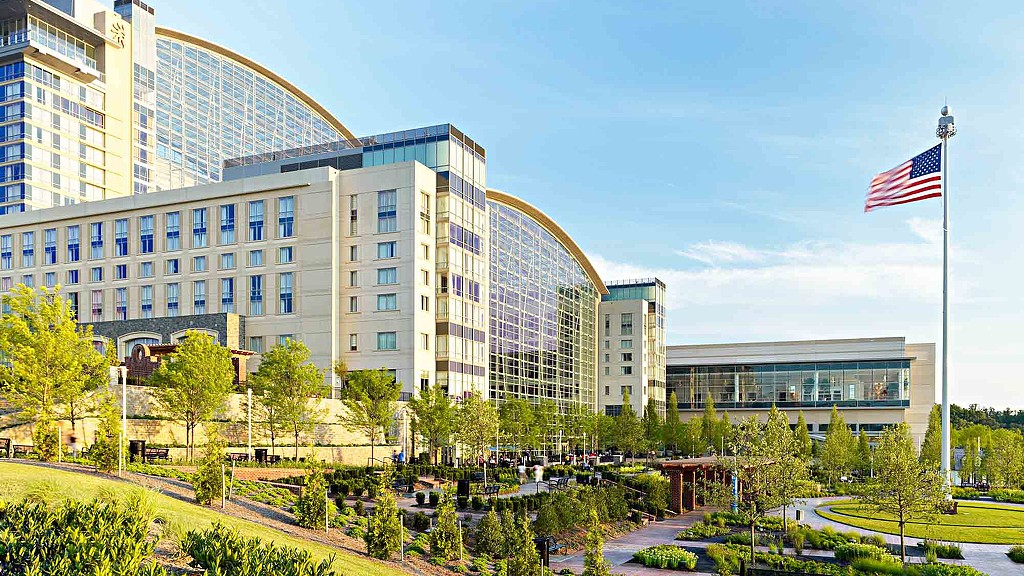
To define the best convention hotels united states requires a departure from traditional hospitality metrics like “stars” or “diamonds.” In the professional sector, a venue’s quality is measured by its Functional Intimacy. This is the property’s ability to host 5,000 people without making any single attendee feel like a statistic. A common misunderstanding is that a “good” convention hotel is simply a large one. In reality, some of the largest hotels in the U.S. are logistical nightmares where “Transit Fatigue”—the time spent walking from a guest room to a meeting room—erodes the attendee’s energy before the first keynote begins.
The risk of oversimplification lies in the belief that luxury and convention-scale are mutually exclusive. The premier properties in markets like Las Vegas, Orlando, Chicago, and Nashville have proven that “Industrial Grace” is possible. If an attendee can hear the clinking of banquet dishes during a sensitive strategy session, the hotel has failed the luxury test, regardless of how expensive the lobby furniture was.
Furthermore, we must account for the “Digital-Physical Nexus.” A top-tier property in 2026 treats high-speed, redundant Wi-Fi not as a “perk,” but as a mission-critical utility on par with electricity. The “best” hotels are those that have over-engineered their back-end infrastructure to support ten devices per person and seamless 4K live-streaming. To understand this market is to realize that you are not just booking rooms; you are renting a high-performance, temporary corporate headquarters.
Deep Contextual Background: The Rise of the Integrated Campus
The American convention hotel has undergone three distinct evolutionary phases. The first, the “Grand Era” (1900s–1950s), focused on social prestige. Properties like the Waldorf Astoria or The Greenbrier were built for “High Society” gatherings where the meeting was secondary to the social ritual. These venues were characterized by high service but low technical flexibility.
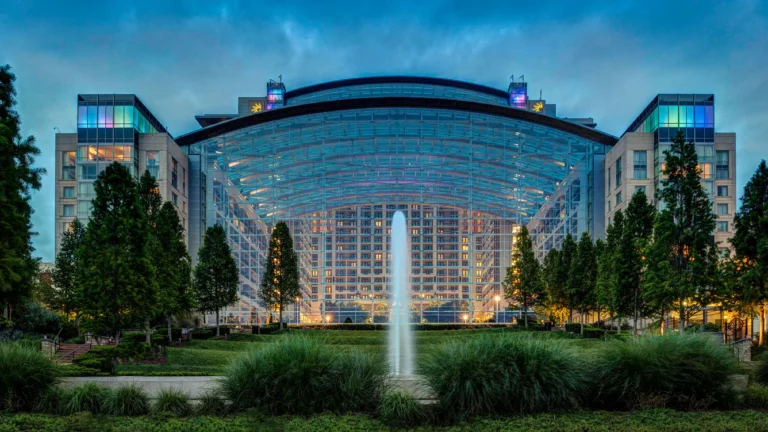
The second phase, the “Atrium Era” (1970s–1990s), saw the rise of the mega-hotel. Architects like John Portman reimagined the hotel as an internal city—vast, open spaces designed to move massive crowds. While these were impressive to look at, they often suffered from poor acoustics and “Sameness,” where the attendee felt lost in a sea of concrete and glass.
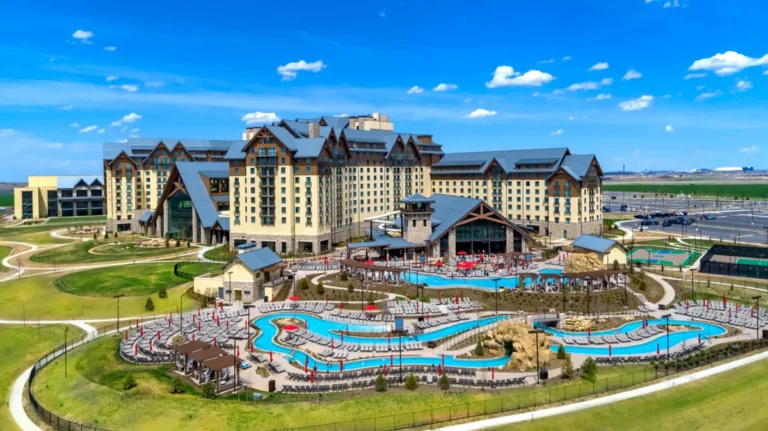
Today, we are in the “Integrated Campus” phase. Modern leaders like the Gaylord properties, the massive Hilton/Marriott hubs in Orlando, and the newer Resorts World Las Vegas represent a shift toward specialized environments. These venues are “Experience Engines” that use biophilic design (integrating nature into the workspace), advanced air filtration systems to combat afternoon lethargy, and hyper-localized food and beverage programs to keep attendees on-site and engaged. The hotel is no longer a place where you stay during a convention; it is the convention.
Conceptual Frameworks and Mental Models for Venue Selection
When auditing a potential site, elite planners use specific frameworks to bypass marketing “fluff.”
1. The “Transit Tax” Model
This framework calculates the total time an attendee spends in non-productive movement (elevators, hallways, shuttle buses). A top-tier hotel minimizes the Transit Tax through “Vertical and Horizontal Stacking”—ensuring that guest elevators drop off near the meeting wing entrance. If the walk exceeds seven minutes, the “Tax” is too high.
2. The “Acoustic Sequestration” Framework
In a high-stakes environment, privacy is the ultimate luxury. This model evaluates the Sound Transmission Class (STC) of moveable walls. A premier venue uses walls with an STC rating of 50 or higher, ensuring that the heavy bass of a neighboring gala doesn’t disrupt a legal briefing next door.
3. The “Cognitive Buffer” Model
This evaluates the sensory load of the environment. Does the carpet pattern cause eye strain? Is the lighting harsh or tuned to the human circadian rhythm? The best hotels use “Circadian Lighting” in windowless ballrooms to prevent the “Vegas Fog” where attendees lose track of time and energy.
Key Categories and Operational Trade-offs
The American market offers several distinct “Service Typologies,” each with its own strategic advantage and inherent compromise.
| Category | Primary Benefit | Operational Trade-off | Ideal For |
| Urban Landmark | High prestige; city access | High transit time (elevators) | Executive Summits |
| Self-Contained Campus | Total immersion; high control | “Bubble” fatigue; high costs | Annual Association Meetings |
| Vegas Mega-Hub | Infinite scale; theater tech | High distraction; high noise | Product Launches; Trade Shows |
| Sunbelt Retreat | Morale-boosting; outdoors | Weather risks; lower tech density | Team Building; Wellness |
| Airport Luxury | Maximum efficiency | No “Sense of Place” | 24-hour Alignment Sessions |
Decision Logic: The “Brand Alignment” Filter
When choosing between the best convention hotels united states, the primary question is: Does the venue’s “Personality” conflict with the event’s “Purpose”? A high-finesse financial summit in a boisterous Las Vegas casino-hotel creates a “Brand Dissonance” that can undermine the seriousness of the content.
Detailed Real-World Scenarios
Scenario 1: The Global Tech Unveiling
A company needs to launch a new hardware product to 3,000 media and partners.
-
The Constraint: Massive power requirements and 100% network uptime for live demos.
-
The Choice: A Vegas Mega-Hub with a dedicated “Broadcast-Ready” ballroom.
-
Failure Mode: Selecting a heritage urban hotel where the 1920s-era power grid trips when the stage lights are turned on.
Scenario 2: The “Silent” Partner Retreat
A law firm brings 400 partners together for a highly sensitive merger discussion.
-
The Constraint: Absolute privacy and “Zero-Leak” acoustics.
-
The Choice: A “Hotel-within-a-Hotel” wing of a major Nashville or Chicago landmark.
-
Second-Order Effect: The use of dedicated, private elevators prevents partners from being seen by the general public.
Planning, Cost, and Resource Dynamics
The “Total Cost of Ownership” (TCO) of a convention extends far beyond the guest room rate.
Range-Based Resource Comparison (USD)
| Item | Mid-Market Standard | Top-Tier Elite | Value Driver |
| Daily F&B | $110 – $160 | $280 – $450 | “Restaurant-Grade” plating |
| AV/Tech Package | $15,000 | $60,000+ | Redundancy & Fiber backbones |
| Service Charge | 20% – 22% | 25% – 30% | Staff-to-Guest ratio (1:15) |
| Room Rate | $250 – $350 | $450 – $850 | Proximity to “the action” |
The Opportunity Cost of Failure is the most significant hidden expense. If a keynote is delayed by 15 minutes due to a technical glitch, and there are 2,000 attendees in the room (avg. salary $150k), the organization has just lost $37,500 in productive time—more than the cost of the entire AV rig.
Technical Systems and Support Infrastructure
The “Hardware” of a premier US hotel is a complex ecosystem designed for stability.
-
Distributed Antenna Systems (DAS): Ensures five-bar cellular signal in windowless, subterranean ballrooms.
-
Heat-Mapping Software: Hotel managers use real-time sensors to see where crowds are “pooling,” allowing them to open satellite coffee stations before a line forms.
-
Dedicated Fiber Backbones: Separate networks for “Show Tech” and “Attendee Wi-Fi” to ensure a streamer doesn’t crash the registration desk.
-
Circadian HVAC Systems: Precision climate control that monitors CO2 levels; as CO2 rises (signaling a crowded room), the system increases fresh air intake to keep attendees alert.
-
Digital Wayfinding: Interactive kiosks that update dynamically as session rooms change or overflow.
Risk Landscape and Failure Modes
Even at the highest level, certain systemic risks can derail an event.
-
Vertical Transportation Paralysis: In high-rise hotels (NYC, Chicago), a single elevator outage during “Mass-Move” times (8:55 AM) can create a 20-minute delay for the entire program.
-
The “Secondary Group” Contamination: If your 300-person high-finesse meeting is sharing a hallway with a 2,000-person loud cheerleading competition, the “Atmospheric Integrity” of your event is lost.
-
Staffing “Troughs”: A hotel is only as good as its tenure. A sudden wave of turnover in the banquet department can turn a 5-star venue into a 3-star experience overnight.
-
Technical “Black Swans”: Over-reliance on integrated systems means a single server failure can shut down room locks, registration, and stage lighting simultaneously.
Governance, Maintenance, and Long-Term Adaptation
Professional procurement teams treat the venue relationship as a “Continuous Audit.”
-
The Post-Con Review (PCR): Beyond checking the bill, this is a forensic audit of service times—how long did it take for the AV tech to arrive? How long did the “plates-out” process take for 1,000 people?
-
The “Maintenance Lifecycle” Check: Before signing a multi-year deal, planners should ask for the hotel’s “Soft Goods Renovation” schedule.
-
The SLA Approach: Treating the hotel contract like a software Service Level Agreement, with specific financial penalties for failures in Wi-Fi uptime or meal delivery times.
Measurement, Tracking, and Evaluation
How do you prove the venue was worth the premium?
-
Quantitative: “Cost Per Productive Hour” (CPPH)—total budget divided by actual attendee hours spent in sessions vs. in transit.
-
Qualitative: “Sentiment Polarity Analysis”—using surveys to see if words like “Seamless,” “Easy,” and “Productive” outweigh “Loud,” “Crowded,” and “Slow.”
-
Operational Metrics: * The “Mic-to-Mouth” Speed: Time from a technical issue report to resolution.
-
The “Turn” Speed: Time taken to flip a room from “General Session” to “Awards Gala.”
-
Common Misconceptions and Oversimplifications
-
Myth: “New hotels are always better.” Correction: New hotels are risky. They have “green” staff and untested systems. A 5-year-old property with a seasoned crew is the “Golden Zone.”
-
Myth: “A big ballroom is the most important room.” Correction: The Pre-Function Space (the hallway) is more important. This is where networking happens and where bottlenecks occur.
-
Myth: “Resort fees are fixed.” Correction: In the convention market, for a large enough block, almost every fee is negotiable.
-
Myth: “Luxury is about the marble.” Correction: Luxury is about the Acoustics. Silence is the most expensive thing a hotel can provide.
Ethical, Practical, or Contextual Considerations
The modern “Best Hotel” must also account for Inclusive Logistics. This means dedicated “Quiet Rooms” for neurodivergent attendees, gender-neutral restrooms that don’t require a five-minute walk, and “Impact Transparency”—reporting on how much food waste was diverted to local shelters. A venue that ignores its “Ethical Footprint” is becoming a brand liability for socially conscious organizations.
Conclusion
The selection of a venue from the best convention hotels united states is a strategic move that acknowledges the high value of attendee time and the psychological power of the environment.
Ultimately, the venue is not a passive backdrop; it is an active participant. The organizations that thrive in the current climate are those that view their hospitality spend as an investment in “Friction-less Production.”