Top Convention Hotel Experiences in America: The Editorial Pillar
The professional hospitality landscape in the United States is currently defined by a move toward “experiential infrastructure.” For decades, the convention hotel was viewed as a utilitarian container—a series of interchangeable ballrooms and guest corridors designed to facilitate the high-volume movement of people. However, as the digital economy reduces the necessity of physical attendance, the “Gathering” has become a premium asset. Consequently, the venues that facilitate these gatherings have had to evolve from passive hosts into active participants in the event’s success, blending industrial-scale logistics with the nuanced touches of high-end leisure.
Selecting a venue from the upper echelon of the domestic market requires a forensic evaluation of how a property manages the “density of interaction.” A flagship hotel is not merely defined by its square footage, but by its ability to maintain a psychological environment of professional focus amidst a sea of thousands of attendees. This requires a sophisticated integration of architectural flow, acoustic engineering, and a digital backbone capable of supporting a hyper-connected workforce. When these elements align, the result is a friction-less environment where the physical building acts as a catalyst for organizational objectives.
To understand the current state of the market, one must look beyond the marketing gloss of “amenities” and “luxury.” In the professional sector, true luxury is the preservation of time and cognitive energy. This article serves as a definitive exploration of the systemic requirements for high-performance hospitality. By deconstructing the operational standards and architectural logic that define the leading American properties, we provide a framework for event strategists to identify venues that offer more than just space—they offer a platform for professional transformation.
Understanding “top convention hotel experiences in america”
To define the top convention hotel experiences in america is to engage in a multi-perspective analysis of “Friction-less Hospitality.” A common misunderstanding in the industry is that a “good” experience is a social one—nice food, a fast check-in, and a comfortable bed. In the high-stakes world of corporate conventions, an “experience” is actually a logistical achievement. It is the ability of the building to disappear into the background so that the content of the event can take center stage. From the perspective of the attendee, the “best” experience is one where they never have to think about the building; from the perspective of the planner, it is one where the venue staff anticipates a crisis before it manifests.
The risk of oversimplification lies in the belief that “Scale” equals “Quality.” Many of the largest properties in the United States are victims of their own success, suffering from “Terminal Fatigue” where the sheer distance between a guest wing and a ballroom wing erodes the energy of the participants. A true “Top Experience” is one that manages the Intimacy-to-Volume Ratio. This involves using architectural cleverness—such as “clusters” of meeting rooms and decentralized food and beverage hubs—to make a 5,000-person event feel as agile and personal as a 200-person board retreat.
Furthermore, we must account for “Vertical vs. Horizontal Velocity.” In high-density urban hotels, the experience is dictated by elevator wait times. In sprawling resort campuses, it is dictated by walking paths. The properties that sit at the top of the American market are those that have solved these physical puzzles through superior engineering, ensuring that the “Transit Tax” on the attendee’s day is kept to an absolute minimum.
The Systemic Evolution of the Professional Campus
The history of the American convention hotel reflects the history of American corporate expansion. In the 1960s, the “Convention Hotel” was an urban fortress—heavy, windowless ballrooms located in the basement or the center of a city-block hotel. The goal was to keep people in the room. This “Black Box” model was efficient but psychologically draining.
The 1980s saw the emergence of the “Atrium Mega-Hotel,” which introduced natural light and internal “cities” to the hospitality experience. This era, pioneered by properties in Atlanta, San Francisco, and Dallas, turned the hotel into a spectacle. However, while these properties were impressive, they often lacked the technical sophistication required for the digital revolution that followed. They were built for “Banqueting,” not for “Broadcasting.”
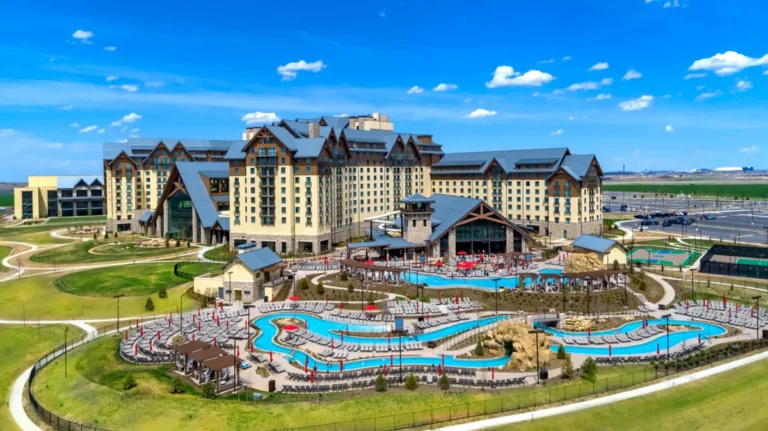
Today, we have entered the era of the Integrated Professional Campus. Leading properties in Las Vegas, Orlando, and Nashville are designed as “Life-Support Systems” for knowledge work. They feature “Indoor-Outdoor” flow, advanced air filtration systems that monitor CO2 levels in real-time to prevent afternoon lethargy, and digital infrastructure that treats Wi-Fi as a primary utility. The evolution has moved from the hotel as a “sleeping quarters” to the hotel as a “strategic asset.”
Conceptual Frameworks for Venue Mastery
To evaluate if a property offers a premier experience, strategists should apply several mental models.
1. The “Decision-to-Destination” Ratio
Every time an attendee has to stop and look at a map, their “Event Momentum” is interrupted. A top-tier venue uses “Intuitive Wayfinding”—using floor textures, lighting cues, and architectural sightlines to guide the guest. The lower the number of “forced decisions” a guest has to make, the higher the experience rating.
2. The Cognitive Ergonomics Model
This framework evaluates the sensory load of the environment. Luxury is often quiet. The “top” hotels invest in acoustic dampening in hallways and high-performance “Moveable Walls” that prevent the noise of a neighboring trade show from bleeding into an executive keynote. The goal is the preservation of the attendee’s “Focus Capital.”
3. The Infrastructure-to-Interface Balance
A venue can have the best technology in the world, but if the “interface” (the staff and the signage) is poor, the technology is useless. This model tests the hotel’s ability to humanize its technical power. A top experience occurs when a “High-Tech” building is managed by a “High-Touch” staff.
Key Categories of Hospitality Excellence
The American market is divided into several “Service Typologies,” each offering a distinct trade-off.
| Category | Primary Strategic Benefit | Primary Logistical Risk | Ideal Event Type |
| The Urban Landmark | High prestige; city-integration | High elevator wait times | Executive Summits; VIP Recruiting |
| The Self-Contained Campus | Total control; high immersion | “Bubble fatigue”; lack of variety | Annual Association Meetings |
| The Vegas Mega-Hub | Infinite scale; theatrical tech | High distraction; travel time | Product Launches; Trade Shows |
| The Sunbelt Retreat | Morale-boosting; indoor-outdoor | Weather dependency; sprawl | Culture-building; Training |
| The Airport Hub (Premium) | Maximum efficiency | Lower “resort” vibe | 24-hour Alignment Sessions |
Decision Logic: The “Density” Filter
When searching for the top convention hotel experiences in america, the first question should be: Is the density of the property a multiplier or a detractor? If your group is 500 people in a 3,000-room hotel, you risk “Brand Dilution.” The best experience is found when the “Scale” of the group matches the “Granularity” of the hotel’s service model.
Detailed Real-World Scenarios
Scenario 1: The “Zero-Latency” Tech Reveal
A Silicon Valley firm launches a new AI platform to 2,000 global partners.
-
The Constraint: Massive bandwidth requirements and “Zero-Lag” live-streaming.
-
The Choice: A Las Vegas Mega-Hub with a dedicated, hard-wired production wing.
-
Failure Mode: Selecting a heritage urban hotel where the 1970s-era wiring creates a “Technical Blackout” during the keynote.
Scenario 2: The High-Stakes Legal Summit
An international law firm brings 300 partners together for sensitive strategic planning.
-
The Constraint: Absolute acoustic privacy and “Boutique” level service.
-
The Choice: A “Hotel-within-a-Hotel” concept (e.g., a private club wing in a major urban landmark).
-
The Lesson: In luxury logistics, privacy is the ultimate amenity.
The Economics of Motion: Cost and Resource Dynamics
A premier experience is a high-resource investment. It is essential to look at the “Net Effective Value” rather than the initial quote.
Range-Based Resource Table (Per Attendee/Day)
| Item | “Standard” Convention | “Top Tier” Experience | Difference Factor |
| Room Rate | $180 – $250 | $350 – $600 | Brand Equity & Proximity |
| F&B (Full Day) | $120 | $220 – $350 | “Restaurant Quality” at Scale |
| Tech Surcharge | $5,000 (total) | $25,000+ (total) | Redundancy & Bandwidth |
| Staff-to-Guest | 1 : 50 | 1 : 15 | Personalization & Response |
The Opportunity Cost of a subpar venue is measured in “Lost Intellectual Hours.” If 1,000 attendees spend 20 minutes a day looking for their breakout rooms or waiting for coffee, that is 333 hours of lost productivity. In a high-salary environment, that “Lost Time” can exceed the cost of the entire hotel rental.
Tools, Strategies, and Technical Support Systems
Elite venues operate on a “Digital Nervous System” that is often invisible to the guest.
-
Distributed Antenna Systems (DAS): Ensures that cellular signals remain at 5-bars even in subterranean ballrooms.
-
Heat-Mapping Software: Allows hotel staff to see where crowds are “pooling” in real-time, triggering the opening of satellite coffee stations before a line forms.
-
Acoustic Modeling: Using software to ensure that the “sound-stage” in the plenary is perfect from the front row to the back.
-
“Smart” HVAC Zones: Maintaining a consistent 68-72°F regardless of the number of people in the room, preventing the “afternoon slump.”
-
Digital Wayfinding (Dynamic): Kiosks that update in real-time based on session changes or room overflows.
-
Kitchen-to-Table Logistics: Using “Thermal Transport” systems that allow for 1,000 plated meals to be served in under 12 minutes without loss of temperature.
The Risk Landscape: Identifying Single Points of Failure
Even among the top convention hotel experiences in america, logistical risks are taxonomic.
-
Vertical Transportation Paralysis: In a 50-story urban hotel, one elevator outage during a “Mass-Move” can create a 30-minute delay across the entire agenda.
-
The “Secondary Group” Conflict: If your 200-person group is sharing a foyer with a 2,000-person group, your “Experience” is at the mercy of their logistics.
-
Technical “Black Swans”: Over-reliance on integrated tech means a single server failure can shut down registration, room locks, and stage screens simultaneously.
-
Staffing “Troughs”: A hotel is only as good as its tenure. A sudden wave of turnover in the banquet department can turn a 5-star property into a 3-star service experience overnight.
Governance, Maintenance, and Long-Term Operational Adaptation
Professional procurement requires a “Continuous Audit” mindset.
-
Post-Con Review (PCR): Beyond the bill, this is a formal audit of “Service Levels”—how long did it take for the AV team to respond to a mic failure?
-
The “Master Incident Log”: Tracking every logistical deviation to adjust the “Buffer Times” in the contract for the following year.
-
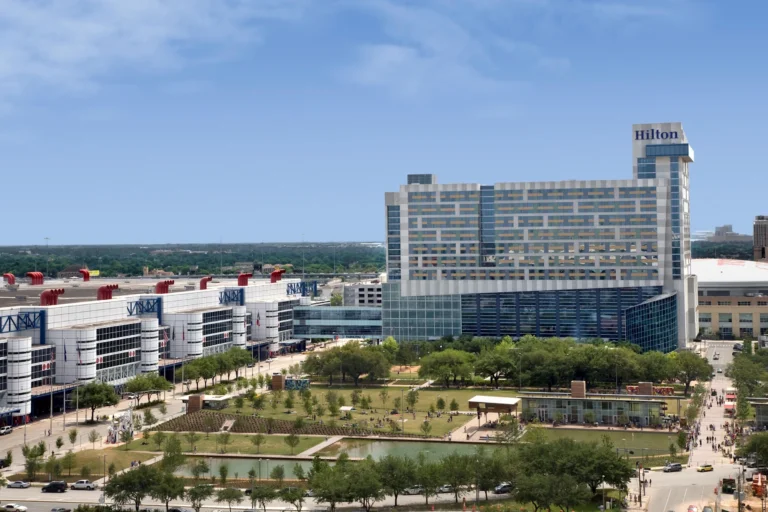
Adjustment Triggers: If a property undergoes a management change (e.g., Marriott to Hilton), it should trigger a mandatory “Site Re-Visit” to ensure the service culture hasn’t been “optimized” away by new management.
Measurement, Tracking, and Evaluation
How do you prove the ROI of a “Top” experience?
-
Quantitative: “Cost Per Productive Hour” (CPPH).
-
Qualitative: “Sentiment Polarity” in attendee surveys—specifically looking for words like “Easy,” “Seamless,” and “Quiet.”
-
Documentation:
-
The Wi-Fi Heat Map: Proves the network held under pressure.
-
The Meal Delivery Audit: Logs the time between “Plates Out” and “Plates Clear.”
-
Common Misconceptions and Oversimplifications
-
Myth: “New hotels are always better.” Correction: New hotels are risky; they have “green” staff and untested systems. A 5-year-old property with a seasoned crew is the “Golden Zone.”
-
Myth: “A big ballroom is all you need.” Correction: A big ballroom without a “Secondary Pre-Function Space” creates a dangerous bottleneck during breaks.
-
Myth: “Resort fees are fixed.” Correction: In the top-tier market, for a large enough group, everything—including the mandatory pool fee—is negotiable.
-
Myth: “Sunday nights are cheap.” Correction: In the convention market, Sunday is “Peak Arrival.” The bargain night is usually Friday or Saturday.
Ethical and Practical Considerations
Modern “Top” experiences must also account for Inclusive Logistics. This means “Quiet Rooms” for neurodivergent attendees, clear labeling for dietary restrictions that doesn’t “other” the individual, and ensuring that the “Path for Mobility” is just as efficient as the standard path. Furthermore, the “Ethical Footprint” of the hotel—how they treat their labor and how they manage their food waste—is becoming a primary decision factor for corporate boards. A “Luxury” hotel that wastes three tons of food a night is increasingly seen as a brand liability.
Synthesis and Editorial Conclusion
The top convention hotel experiences in america are not defined by the height of their atriums or the quality of their marble. They are defined by the precision of their engineering—both physical and human. As the corporate world moves toward “Hyper-Engagement,” the venue acts as the “Hardware” upon which the “Software” of the event runs. If the hardware is flawed, the software will crash, regardless of how brilliant the content may be.
For the event architect, the goal is to find the property that balances “Volume” with “Velocity.” It is the search for a space that respects the attendee’s time, preserves their focus, and amplifies the organization’s message through the silent power of seamless logistics. In the end, the most successful gathering is the one where the venue was so perfect that no one even noticed it was there.