Luxury Convention Hotel USA: The Definitive Editorial Pillar
The concept of high-end hospitality in the luxury convention hotel usa professional sector has undergone a profound structural transformation over the last two decades. No longer is the premium experience defined solely by the thread count of the linens or the presence of a white-glove concierge. In the modern corporate landscape, luxury is increasingly defined by the absence of friction and the presence of hyper-specialized infrastructure. When a major organization seeks a venue for a global summit or a high-stakes board retreat, they are looking for an environment where technical precision meets aesthetic sophistication—a synthesis of industrial-grade logistics and refined service culture.
The American market is unique in its ability to support these massive, multi-functional ecosystems. Unlike the heritage hotels of Europe, which often struggle with the physical constraints of historic architecture, the premier venues in the United States are often purpose-built to handle thousands of attendees without sacrificing the intimacy required for executive decision-making. This creates a complex operational challenge: maintaining the “boutique” feel of a luxury brand while managing the “mass” requirements of a convention.
For the event strategist, the selection of such a property is a high-stakes investment in the organization’s brand equity. A venue acts as a silent communicator of a company’s status, values, and attention to detail. Consequently, the analysis of these properties must go beyond superficial amenities. One must examine the “unseen” luxuries: the acoustic isolation of the meeting rooms, the redundancy of the digital networks, and the sophistication of the banquet labor force. This article serves as an exhaustive framework for navigating the upper echelon of the domestic hospitality market, providing the analytical tools necessary to differentiate between mere scale and genuine professional excellence.
Understanding “luxury convention hotel usa”
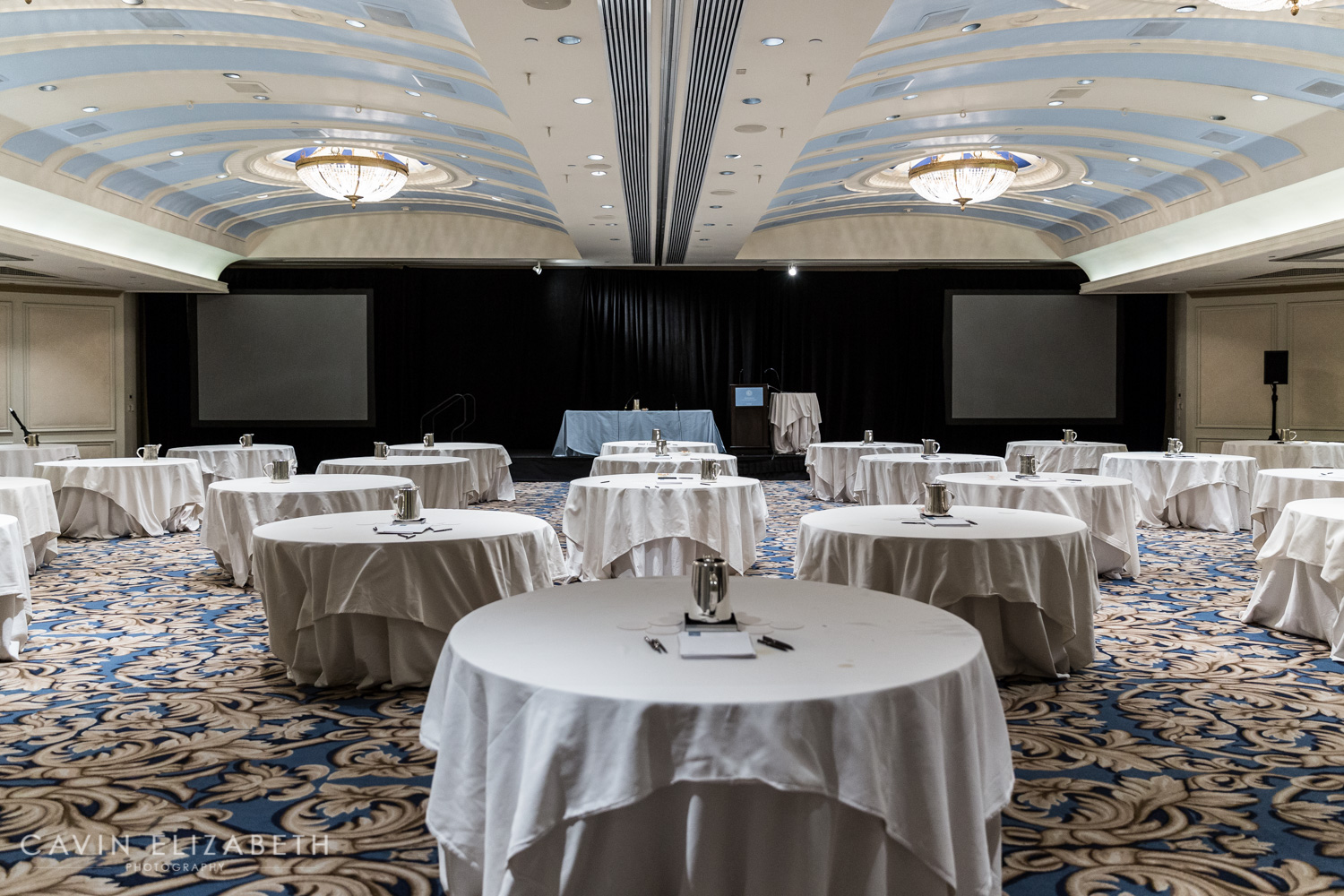
Defining a luxury convention hotel usa requires a departure from traditional hospitality metrics. In the context of a high-density professional gathering, luxury is a functional asset rather than a cosmetic one. From a multi-perspective view, the “luxury” tag implies that the venue has invested in the three pillars of premium operations: Architectural Intent (flow and light), Technical Superiority (redundant systems), and Human Capital (tenured staff). A common misunderstanding is that a luxury hotel is simply a standard hotel with better furniture; in reality, a true luxury convention property is designed from the ground up to prevent the “mass-market fatigue” that often plagues large gatherings.
The risk of oversimplification lies in the belief that luxury can be “bolted on” to a mid-market property through a renovation. True luxury in this sector is baked into the floor plan—wide corridors that prevent bottlenecks during session breaks, soundproofed meeting walls with high STC (Sound Transmission Class) ratings, and loading docks that allow for seamless, quiet setup of complex productions. If an attendee feels the “crowd,” the luxury experience has failed. Thus, the metric of success is the “Perceived Intimacy” of the event, regardless of the total headcount.
Furthermore, we must address the “Service-to-Guest” ratio. This level of attention ensures that the venue acts as an extension of the organization’s own executive team. To master this domain is to understand that you are not just buying rooms and food; you are buying the preservation of your attendees’ cognitive energy.
The Historical Transition from Grand Hotels to Integrated Hubs
The history of premium American hospitality began with the “Grand Hotels” of the late 19th and early 20th centuries. Properties like the Fairmont in San Francisco or The Greenbrier in West Virginia were social destinations that happened to host meetings. However, as the American corporation expanded in the mid-20th century, these properties struggled to accommodate the technical needs of the burgeoning “Convention Era.”
The 1980s and 90s marked the rise of the “Atrium Era,” where architects like John Portman reimagined the hotel as a self-contained city. This was the first attempt to bring luxury to scale. While successful in terms of volume, these properties often lacked the specialized acoustic and technological infrastructure required for modern knowledge-sharing. They were impressive to look at, but often logistically “loud” and difficult to navigate for the serious professional.
Today, we have entered the era of the “Integrated Luxury Campus.” Modern premier hotels—particularly those in urban centers like Chicago, Las Vegas, and Miami—utilize a “hub-and-spoke” architectural model. They isolate the guest rooms from the meeting noise through physical distancing or advanced soundproofing, while utilizing “high-velocity” kitchens that can deliver five-star cuisine to 2,000 people simultaneously.
Conceptual Frameworks: The Architecture of Premium Events
To evaluate a property’s true standing, planners should apply specific mental models that test the limits of the venue’s infrastructure.
1. The “Zero-Friction” Flow
This framework measures the number of “decisions” an attendee has to make to get from their bed to their seat in the plenary hall. A luxury venue uses intuitive design—lighting, carpet patterns, and sightlines—to guide the attendee. If a guest has to look for a sign or ask for directions more than twice, the flow is flawed.
2. The Acoustic Isolation Buffer
A premium event often involves sensitive information. This framework evaluates the “audio leakage” between rooms. In a high-end property, the moveable walls are not just partitions; they are engineered barriers. The “luxury” here is the privacy that allows for candid executive discourse without fear of being overheard by the group in the next salon.
3. The Digital Redundancy Model
In a world of live-streaming and cloud-based demos, bandwidth is a utility on par with electricity. A luxury property treats its network as a mission-critical system, providing dedicated fiber lines, on-site IT engineers, and “burst” capabilities that can handle 10 devices per attendee. The framework posits that the more “invisible” the technology is, the more luxurious it feels.
Key Categories and Operational Trade-offs
The “Luxury” label covers a variety of property types, each with its own strategic advantage.
| Category | Primary Benefit | Operational Trade-off | Strategic Mitigation |
| The Urban Landmark | High prestige; central access | Smaller loading docks; higher noise | Use for board meetings; off-site storage |
| The Modern Mega-Resort | Infinite scale; top-tier tech | High “transit fatigue” | Staggered starts; satellite registration |
| The Boutique Convention | Intense personalization | Limited plenary space | Best for groups under 300; executive focus |
| The Airport Hub (Luxury) | Maximum efficiency | Lower “resort” feel | Use for 24-hour rapid alignment |
| The Heritage Retreat | High social capital; privacy | Aging tech infrastructure | Hire external AV to supplement house gear |
Detailed Real-World Scenarios
Scenario 1: The Global Executive Summit
A Fortune 100 company brings 150 CEOs to a single location.
-
The Constraint: Absolute privacy and immediate, personalized service.
-
The Decision: Selecting a Boutique Convention hotel with a “Hotel-within-a-Hotel” concept (e.g., a private club floor).
-
Failure Mode: Using a high-volume resort where the executives have to stand in line for coffee with 2,000 other conventioneers.
Scenario 2: The High-Tech Product Reveal
A tech giant launches a new device to 2,000 global media and partners.
-
The Constraint: Massive power requirements and “zero-latency” Wi-Fi.
-
The Decision: A Modern Mega-Resort with a dedicated production wing.
-
Second-Order Effect: The high-volume catering must maintain “fine-dining” standards to match the brand’s premium identity.
Planning, Cost, and Resource Dynamics
The “Total Account Value” of a luxury gathering is significantly higher than a standard event, but the “Indirect Costs” of a failure are also much greater.
Range-Based Expense Comparison Table
| Item | Mid-Market Avg | Luxury Avg | Value Lever |
| Guest Room | $220 – $350 | $550 – $950 | Cumulative room-night credits |
| Daily F&B | $120 | $250 – $400 | “Chef’s Choice” menu engineering |
| AV/Tech Surcharge | $5,000 | $25,000+ | Negotiate “Inclusive” tech packages |
| Service Charge | 22% | 25% – 30% | Audit the “tax-on-service” math |
One of the most significant resources in a luxury environment is Time. Because luxury properties are more efficient in their service delivery (e.g., faster room turns, better organized meal service), the “Agenda Velocity” is higher.
Technical Systems and Support Infrastructure
The “hidden” luxury of a top-tier US venue is its ability to act as a data center.
-
Distributed Antenna Systems (DAS): Ensures that cellular signals are 100% stable even in deep, subterranean ballrooms.
-
Isolated Stage Power: Prevents “electronic noise” from the kitchen or HVAC systems from interfering with the sensitive audio equipment on stage.
-
Climate Control Zoning: Precision HVAC that allows a room of 500 to stay cool without freezing the 20 people in the front row.
-
Security Enclaves: Secure entrance points and “back-of-house” transit routes for high-profile speakers or controversial figures.
-
Digital Wayfinding (Dynamic): Kiosks that update in real-time based on session attendance, redirecting “overflow” crowds to secondary rooms seamlessly.
The Risk Landscape: Identifying High-Density Failure Modes
Luxury is no shield against operational risk; in fact, the higher expectations make failures feel more acute.
-
The “Compromised Perimeter”: In an urban hotel, managing the “public” access to the lobby can be a security risk for high-profile groups.
-
Staff Turnover Contagion: A luxury hotel is only as good as its tenure. A sudden departure of the Banquet Manager can lead to a “Service Cascade” failure during the most important dinner of the year.
-
Technical “Black Swan” Events: When a venue relies heavily on integrated tech, a single server failure can shut down registration, door locks, and the plenary screens simultaneously.
-
Noise Contamination: The risk of a loud wedding in the adjacent ballroom is the most common “luxury killer” in the convention sector.
Governance, Maintenance, and Long-Term Adaptation
Professional procurement teams treat the venue relationship as a “Continuous Audit.”
-
The Post-Con Review (PCR): Beyond checking the bill, this involves a “Service Audit” where every delay over 5 minutes is logged and analyzed.
-
The “Service-Level Agreement” (SLA) Approach: Treating the hotel contract like a software contract, with specific penalties for failures in Wi-Fi uptime or meal delivery times.
-
Adjustment Triggers: If a hotel changes management or ownership during the planning cycle, it should trigger a mandatory “Site Re-Visit” to ensure the service culture hasn’t eroded under the new regime.
Measurement, Tracking, and Evaluation
How do you prove the ROI of a luxury convention hotel usa?
-
Quantitative: “Cost Per Productive Hour”—calculating the budget relative to the actual time attendees spent in sessions vs. in transit or in line.
-
Qualitative: “Sentiment Polarity”—using AI to analyze attendee feedback for words like “seamless,” “easy,” and “professional” vs. “frustrating” or “crowded.”
-
Documentation: The “Master Incident Log”—a luxury event should have a near-zero incident count regarding basic logistics (e.g., “no water in room,” “broken mic”).
Common Misconceptions and Oversimplifications
-
Myth: “Luxury is just about the food.” Correction: Luxury is about the timing of the food. Delivering 1,000 hot, high-quality plates in 15 minutes is the luxury.
-
Myth: “New hotels are always better.” Correction: New hotels are risky. They have “green” staff and untested systems. A 5-year-old property with a seasoned team is the sweet spot.
-
Myth: “Resort fees are fixed.” Correction: In the luxury sector, everything is a negotiation. For a large enough group, these “nuisance fees” are almost always waived.
-
Myth: “Luxury hotels are too rigid.” Correction: The hallmark of a true five-star property is “Operational Agility”—the ability to pivot a dinner from outdoors to indoors in 20 minutes without the attendee noticing.
Ethical and Practical Considerations
The “Luxury Footprint” is under increasing scrutiny. Ethical procurement now requires looking at a hotel’s labor relations and its “Sustainability Certifications.” A luxury property that wastes tons of food or ignores its carbon footprint is becoming a brand liability. The modern luxury venue must provide “Impact Transparency”—reporting on how much waste was diverted and how the staff is being supported. Practically, this means planners are now asking for “Social Impact Reports” alongside their menu options.
Synthesis and Editorial Conclusion
The decision to utilize a luxury convention hotel usa is a strategic move that acknowledges the high value of attendee time and the psychological power of the environment. In the United States, this sector has matured into a sophisticated engine of professional exchange, where the “luxury” is found in the meticulous engineering of the experience. It is a domain where the architect, the technologist, and the hospitality professional work in concert to eliminate the friction of the mass-gathering.
Ultimately, the venue is not just a backdrop; it is a participant in the event’s success. The organizations that thrive in the current climate are those that view their hospitality spend as an investment in human capital.