Convention Hotel Technology Overview: The 2026 Strategic Guide
The modern convention hotel is no longer merely a provider of square footage and sleeping quarters; it has evolved into a high-density, hyper-connected data center with hospitality attached. For the organizational strategist, the technology stack of a venue is the single most significant predictor of an event’s operational success. When 5,000 delegates descend upon a ballroom, their collective digital footprint places a stress on infrastructure that rivals small municipal utilities. Understanding the mechanics behind this infrastructure is the difference between a seamless executive summit and a fragmented logistical failure.
As we navigate the middle of this decade, the integration of physical space and digital amplification has reached a state of “Hyper-Convergence.” The “Technical Rider” for a modern convention now encompasses everything from low-latency 5G slicing to biometric credentialing and real-time environmental IoT monitoring. This shift necessitates a move away from viewing venue tech as a series of “Add-ons” and toward treating it as “Core Utility.” The hotel’s ability to manage these systems determines the “Cognitive Load” placed on both the organizer and the attendee, dictating the ultimate ROI of the gathering.
This editorial reference provides a forensic examination of the systems that animate the contemporary convention environment. We move beyond the surface-level marketing of “Smart Rooms” to analyze the “Underlying Architecture” that facilitates large-scale human assembly. By deconstructing the hardware, software, and human-capital layers of the hospitality tech stack, this article serves as a definitive resource for professionals who demand technical depth and operational clarity.
Understanding “convention hotel technology overview”
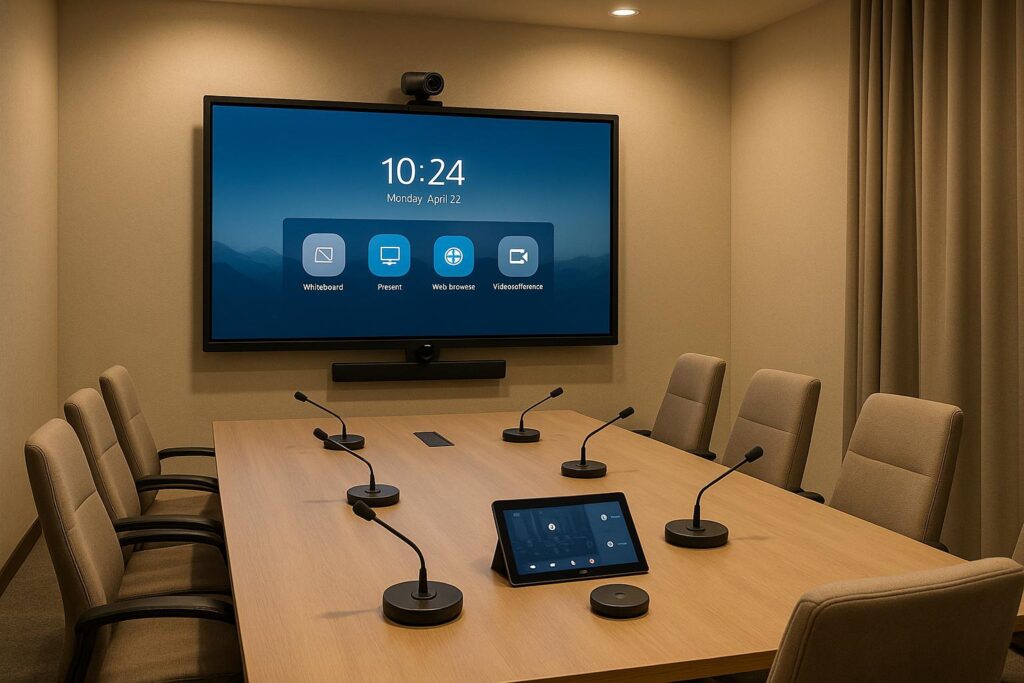
To conduct a meaningful convention hotel technology overview, one must first dismantle the oversimplification that “better tech equals more gadgets.” In the context of high-stakes assemblies, technology is a “Friction-Reduction Engine.” Its primary purpose is to remove the barriers between the content and the attendee. This involves a multi-perspective audit: the planner seeks “Administrative Transparency”; the attendee seeks “Seamless Integration”; and the IT Director seeks “Network Resilience.”
A common misunderstanding in the procurement process is conflating “AV Capability” with “Building Infrastructure.” A hotel may boast a 40-foot LED wall, but if its “Backbone” is built on aging Cat5e cabling with insufficient power distribution, the “Production Value” will be crippled by “Systemic Instability.” True technical mastery is found in the “Foundation Layers”—the hidden fiber optics, the redundant power supplies, and the segmented VLANs that allow for the secure and rapid transmission of data.
Oversimplification risks often manifest in the “Connectivity Guarantee.” A venue promising “High-Speed Wi-Fi” without specifying “Device Density” or “Concurrent User Caps” is providing a meaningless metric. In a 2026 environment, a convention hotel technology overview must address the “Spectrum Management” required when thousands of personal devices, Bluetooth peripherals, and wireless microphones all compete for the same narrow bands of airwaves. The goal is “Digital Sovereignty”—the ability for an event to operate within its own dedicated, interference-free digital ecosystem.
Historical Context: The Path to Digital Ubiquity
The evolution of convention technology is a transition from “Analog Hospitality” to “Software-Defined Spaces.” In the late 20th century, the technical requirement of a hotel was “Acoustic Clarity”—a functioning PA system and a slide projector. The “Technical Manager” was often a member of the maintenance crew, and the “Network” was the hotel’s telephone switchboard.
The 2000s saw the “Internet Surge,” where hotels scrambled to retrofit rooms with Ethernet ports. This was the “Patchwork Era,” characterized by inconsistent speeds and external ISPs that had little integration with the hotel’s internal operations. By 2015, the “Mobile First” movement shifted the focus to “Wireless Density,” forcing hotels to move Access Points (APs) from the hallways into the individual meeting rooms to handle the surge in smartphone usage.
Today, we have entered the era of “Contextual Intelligence.” The modern venue is a “Sensing Organism.” High-tech properties now utilize “Digital Twins” to simulate crowd flow and “IoT Feedback Loops” to manage air quality in real-time. The technology is no longer an “Insertion” into the building; it is the building’s “Nervous System.” Understanding this evolution is vital for the modern strategist, as it explains why certain legacy properties struggle with “Signal Penetration” while new-build “Smart Nodes” operate with near-zero latency.
Conceptual Frameworks: The Architecture of Connectivity
To evaluate a facility’s technical “Maturity,” use these three core mental models.
1. The “Layered-Vulnerability” Matrix
This framework audits the “Defense-in-Depth” of the hotel’s network. It moves from Layer 1 (Physical Fiber/Cabling) up to Layer 7 (Application/Attendee App). A “Top” property is one where each layer is logically separated, ensuring that a “Denial of Service” (DoS) attack on the attendee Wi-Fi cannot affect the hotel’s “Property Management System” (PMS) or the fire safety controls.
2. The “Elasticity-to-Latency” Ratio
This model measures the system’s ability to “Scale” without “Slowing.” In a high-velocity conference, the network must be “Burst-Capable”—able to handle 5,000 people downloading a 200MB app simultaneously. This framework audits the “Backhaul Capacity” rather than just the “Local Speed.”
3. The “Human-Machine Interface” (HMI) Efficiency
This model evaluates the “Usability” of the tech. If a staff member or attendee has to navigate more than three “Touch-Points” to accomplish a task (e.g., joining the Wi-Fi or dimming the lights), the HMI efficiency is low. The goal is “Invisible Tech”—systems that respond to intent rather than requiring manual configuration.
Key Categories: Infrastructure, Production, and Experience
The technical “Stack” of a convention hotel is divided into three distinct operational silos.
| Category | Primary Focus | Technical Driver | Failure Impact |
| Infrastructure | Network / Power / HVAC | Fiber Optics / SD-WAN | Total event blackout |
| Production | AV / Lighting / Rigging | LED / Dante Audio / 4K | Poor “Content” delivery |
| Experience | Mobile / Biometrics / AR | APIs / NFC / 5G | High attendee “Friction” |
| Operational | PMS / Staff Comms | Cloud Computing / IoT | Logistical bottlenecks |
Decision Logic: The “Production-Utility” Filter
When determining the technical needs of an event, planners must distinguish between “Spectacle” (High Production) and “Utility” (High Infrastructure). A medical summit requires 100% “Utility” (bandwidth for remote surgery streams), while a product launch requires 100% “Production” (theatrical lighting and sound). The convention hotel technology overview must be tailored to these specific “Payloads.”
Detailed Real-World Scenarios
Scenario 1: The “Signal Saturation” Crisis
A 3,000-person developer conference involves “Live Coding” on stage.
-
The Constraint: 3,000 laptops and 6,000 mobile devices are all active in one ballroom.
-
The Failure Mode: The Bluetooth wireless microphones begin to “Drop” because the 2.4GHz spectrum is completely saturated.
-
The Mitigation: A venue with “Spectrum Management” has already “Locked Down” the 2.4GHz band and forced all attendee traffic to the 5GHz or 6GHz (Wi-Fi 6E) bands, reserving the lower bands for critical “Production Audio.”
Scenario 2: The “Hybrid Sync” Lag
An international gala has 500 people in the room and 5,000 watching via a “Two-Way” interactive stream.
-
The Constraint: The hotel’s upload speed is “Asymmetric” (high download, low upload).
-
The Failure Mode: The remote speakers appear “Choppy,” and the Q&A session has a 5-second lag, destroying the “Flow” of the event.
-
The Solution: A property with “Symmetric Fiber” and “Tier-1 Peering,” ensuring that the “Upstream” to the cloud is as fast as the “Downstream” to the room.
Planning, Cost, and Resource Dynamics
The “Sticker Price” of hotel tech often obscures the “Total Cost of Ownership” (TCO) for the planner.
Range-Based Technical Resource Table (Daily Rates)
| Expense Pillar | Standard “House” Rate | “Elite/Dedicated” Rate | Strategic Reason |
| Internet (Symmetric) | $2,000 – $4,500 | $8,000 – $15,000 | Dedicated VLAN / Public IPs |
| AV Labor (Staffing) | $85 – $150/hr | $250 – $450/hr | “Systems Engineers” vs “Techs” |
| Power Distribution | $150 per 20amp | $1,500 (Stage-Tie) | High-draw LED walls |
| Rigging Points | $150 – $350/pt | $500 – $850 (Motor) | Safety / Weight-load audits |
The “Opportunity Cost” of Legacy Tech: If a planner saves $10,000 by choosing a hotel with aging Wi-Fi, the “Opportunity Cost” is the loss of “Social Amplification” when attendees cannot post videos in real-time. Tech is the “Loudspeaker” of the brand.
Tools, Strategies, and Support Systems
To manage a modern tech stack, the “Technical Director” must employ “Operational Overlays.”
-
Network Heat-Mapping: Using software to visualize “Dead Zones” in real-time and moving portable “Mesh Nodes” to compensate.
-
Dante Audio-over-IP: Moving away from analog “Copper” snakes to digital audio networking, allowing for “Lossless” signal routing across the entire hotel.
-
API-Driven Registration: Integrating the event’s “Registration Software” with the hotel’s “Mobile Key” system for frictionless room entry.
-
OLED Wayfinding: Replacing static foam-core signs with “Dynamic Digital Displays” that can update in seconds if a room change occurs.
-
Biometric Flow Analysis: Using “Privacy-Compliant” sensors to track crowd density, allowing staff to open new “Coffee Stations” before a queue forms.
-
“Dark Fiber” Sourcing: For high-security summits, bypassing the hotel’s public ISP entirely and bringing in a dedicated, private connection.
Risk Landscape and Systemic Failure Modes
Risk in convention technology is “Compounding.” A failure in the “Cooling” of the server room can lead to a failure of the “Wi-Fi,” which leads to a failure of the “App,” which halts “Lead Retrieval” for the exhibitors.
-
The “Single-Point” ISP Failure: If the hotel has only one fiber line entering the building and a construction crew down the street cuts it, the event dies. Mitigation: Require “Dual-Homed” connectivity from two different providers entering via two different physical points.
-
The “Spectrum Overlap” Risk: Nearby hotels or businesses running high-power wireless signals that interfere with the event’s internal networks.
-
The “Cyber-Physical” Threat: Ransomware targeting the hotel’s “Building Management System” (BMS) to lock the ballroom doors or disable the AC.
Governance, Maintenance, and Long-Term Adaptation
A premier tech environment is one that is “Continuously Commissioned.”
-
The “Pre-Con” Bandwidth Audit: Performing a “Load Test” on the hotel’s network 48 hours before the event to ensure that the promised speeds are available at the “Jack” and not just the “Hub.”
-
Governance Checklist:
-
[ ] Verification of “Network Segmentation” (Are the cameras on a different VLAN than the attendees?).
-
[ ] Audit of “Power Redundancy” (UPS and Generator coverage for the main rack).
-
[ ] Confirmation of “Cyber-Insurance” coverage for both the venue and the organizer.
-
[ ] Review of “Staff Certifications” (e.g., CTS, CTS-D, or CCNA).
-
Measurement, Tracking, and Evaluation
High-tech success is measured by “Data Fidelity” and “System Uptime.”
-
Leading Indicator: “The Latency Floor.” Is the “Ping Time” to the local gateway consistently under 10ms?
-
Quantitative Metric: “Bandwidth Utilization Curve.” Tracking when the “Peak Draw” occurs to plan for next year’s capacity.
-
Qualitative Signal: “The ‘Tech-Frustration’ Survey.” Asking attendees: “Did the technology help you, or did you have to think about it?”
Common Misconceptions and Oversimplifications
-
“5G will make hotel Wi-Fi obsolete.” Correction: 5G signals struggle to penetrate the concrete and “Low-E” glass of large hotels. Indoor “Wi-Fi 6/7” is still the primary carrier.
-
“High-speed internet is the same as high-capacity internet.” Correction: Speed is about “One Person”; Capacity is about “A Crowd.”
-
“The ‘In-House’ AV team is always the best.” Correction: In-house teams are “Generalists.” For complex production, you need “Specialists.”
-
“LED walls don’t need much power.” Correction: Large LED arrays are “Thermal Engines” that require significant “Amperage” and dedicated cooling.
-
“I don’t need a technical director if the hotel has one.” Correction: The hotel’s TD works for the building. You need someone who works for the event.
-
“All Cat6 cables are the same.” Correction: “Shielded” vs “Unshielded” matters immensely in environments with high electrical interference.
-
“Virtual tours are just for sales.” Correction: “Digital Twins” are critical for “Production Planning” and “Rigging Audits.”
-
“More access points mean better signal.” Correction: Too many APs create “Self-Interference.” Optimization is an “Engineering” task, not a “Hardware” task.
Ethical, Practical, or Contextual Considerations
The deployment of pervasive technology in hotels raises significant “Privacy vs. Personalization” questions. A convention hotel technology overview must address “Data Sovereignty”—ensuring that the “Digital Breadcrumbs” left by attendees (where they went, what they clicked) are protected and not sold to third-party aggregators. Practically, this involves implementing “Zero-Trust” network architectures and ensuring that any “Biometric” data collected is “Deleted-on-Departure” (DoD). As the industry moves toward “AI-Driven” hospitality, the ethical “Audit Trail” becomes a core component of the planner’s liability.
Synthesis and Editorial Conclusion
The technical infrastructure of a convention hotel is the “Silent Partner” in the event’s success. It is the invisible force that allows ideas to be transmitted, connections to be made, and brand narratives to be amplified. However, the true mastery of this technology lies in its “Transparency.” When the tech works perfectly, it disappears—leaving only the “Human Connection” in its wake.
For the modern strategist, the goal is to move from “Managing Tech” to “Architecting Outcomes.” The most successful gatherings of 2026 will not be those with the most “Gadgets,” but those that utilize a “Hyper-Converged” hotel environment to create a state of “Uninterrupted Focus.” In the end, technology is not the event; it is the “Platform” upon which the event is built.