Waterfront Convention Hotel Destinations USA: The Editorial Pillar
The integration of high-capacity hospitality infrastructure with significant aquatic geography represents a specific sub-sector of the American meeting and convention market. While a standard urban hotel provides utility through proximity to commercial centers, a waterfront property operates as a dual-purpose asset, combining a rigorous professional environment with a psychologically restorative backdrop. This intersection of “hard” logistics and “soft” atmospheric influence is increasingly prioritized by organizations seeking to maximize attendee engagement and retention in an era of digital saturation.
For the event strategist, the coastal or riverfront venue is not merely an aesthetic choice; it is a structural one. These locations often dictate unique architectural constraints, from specialized loading dock orientations necessitated by sea-level considerations to the engineering of “blue-space” views that do not compromise the technical darkness required for high-fidelity plenary sessions. The complexity of managing a 5,000-person summit in a property that is also a seasonal tourist destination requires a sophisticated understanding of localized economic cycles and the hotel’s own yield-management imperatives.
In the contemporary United States, the designation of a waterfront destination encompasses a vast range of ecosystems—from the high-salinity environments of the Atlantic and Pacific seaboards to the freshwater expanses of the Great Lakes and the engineered riverfronts of the South and Midwest. Each category presents a different set of operational variables, including varying labor mandates, seasonal weather risks, and transportation “choke points” unique to maritime proximity. This analysis provides an exhaustive framework for evaluating these venues as strategic assets rather than merely scenic backdrops.
Understanding “waterfront convention hotel destinations usa”
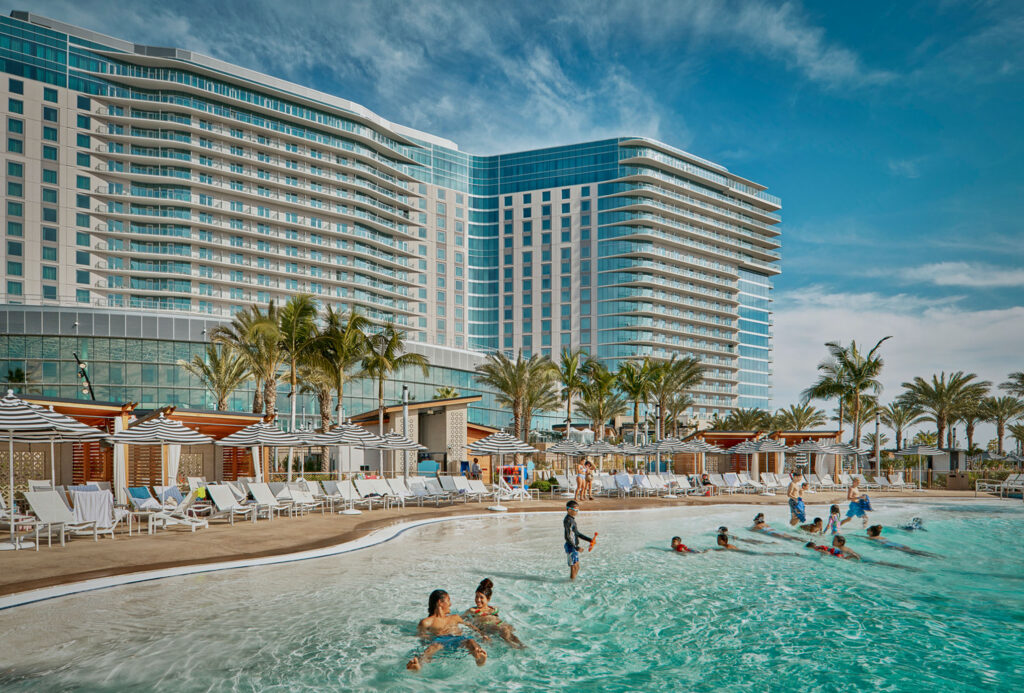
To engage with the category of waterfront convention hotel destinations usa is to recognize that the “waterfront” is a functional modifier of the attendee experience. A common misunderstanding in procurement is the belief that proximity to water is an indulgence that detracts from the serious nature of a convention. On the contrary, cognitive science suggests that “blue-space” exposure reduces the cortisol levels of participants, potentially increasing the reception of complex data during intensive sessions. Therefore, the waterfront property should be evaluated as a tool for “Mental Stamina Management.”
Oversimplification in this sector often leads to the “Resort Trap,” where a property is chosen for its views but lacks the industrial-grade “back-of-house” infrastructure required for professional logistics. A true convention hotel must be able to move 3,000 people from a guest floor to a ballroom in under twelve minutes, regardless of its proximity to a marina. The risk is selecting a venue where the aesthetic charm obscures a lack of freight elevator capacity or insufficient electrical load for modern AV productions.
From a multi-perspective view, the stakeholder’s objective is to balance “Brand Prestige” with “Logistical Resilience.” For a pharmaceutical summit, the waterfront represents a sterile, high-end environment for data-sharing; for a tech launch, it provides a dynamic backdrop for social networking. The definition of the “best” destination is therefore not a universal constant but a relative calculation based on the specific “Event Gravity” of the organization.
Historical and Systemic Evolution of the Waterfront Venue
The American convention hotel has undergone a significant architectural migration toward the water. In the mid-20th century, waterfronts were largely industrial zones—hubs for shipping, manufacturing, and transit. Convention hotels were traditionally located in the “Central Business District” (CBD), often blocks or miles away from the docks. The transformation began in the late 1970s and 80s as cities like Baltimore, San Diego, and Boston began “Urban Waterfront Revivals,” converting decaying industrial space into high-density hospitality and retail corridors.
This shift was dictated by a change in corporate culture. As travel became more commoditized, the “City Hotel” lost some of its allure. Organizations began seeking “Destination Magnets” that could justify the time and expense of physical attendance. The waterfront became the ultimate magnet. Properties like the San Diego Marriott Marquis or the Boston Harbor Hotel demonstrated that a venue could be both a high-volume convention hub and a luxury retreat.
Today, we are in the era of the “Hyper-Integrated Waterfront.” Modern developments—such as those in National Harbor, Maryland, or the newer riverfront expansions in Savannah and New Orleans—treat the water as an extension of the ballroom. This involves “Indoor-Outdoor” flow where break-out sessions can be held on climate-controlled terraces. The historical evolution has moved from the waterfront as a place of labor (shipping) to a place of intellectual exchange (conventions).
Conceptual Frameworks for Coastal Site Selection
To move beyond superficial evaluation, planners should apply these three core mental models.
1. The “Blue-Space” Utility Ratio
This framework measures the percentage of the attendee’s day spent with a sightline to the water versus the “Transit Tax” required to get there. If the water is only visible from the high-priced guest rooms but the meeting space is buried in a windowless basement, the “Utility Ratio” is low. The best venues are those that utilize glass-walled pre-function spaces to keep the “blue-space” benefit active during networking breaks.
2. The Micro-Climate Resilience Model
Waterfronts create their own weather. This model evaluates a venue’s ability to maintain “Atmospheric Consistency” despite external humidity, wind, or fog. A property with poor HVAC zoning in a humid coastal city will suffer from “Condensation Friction”—slippery floors, damp linens, and tech failures. The framework prioritizes buildings with “Double-Skin” facades or advanced moisture-control systems.
3. The Captive-Audience Equilibrium
A waterfront location often acts as a physical barrier. While this is excellent for “Attendee Retention” (preventing people from wandering off to other parts of the city), it can lead to “Facility Fatigue.” This framework evaluates the venue’s internal variety—does it have enough diverse dining and social “neighborhoods” to keep the group engaged for four days without feeling trapped?
Key Categories and Geographic Variations
The American waterfront is not a monolith. Each region carries distinct operational trade-offs that impact the budget and the experience.
| Category | Typical Location | Primary Benefit | Primary Constraint |
| The Urban Seaboard | San Diego, Boston, Miami | High prestige; easy airlift | Extreme pricing; union labor |
| The Riverfront Hub | New Orleans, Savannah, Memphis | High “Sense of Place”; walkability | Humidity; high density/crowds |
| The Great Lakes Campus | Chicago, Detroit, Cleveland | Massive scale; central US location | Seasonal volatility (winter) |
| The Engineered Basin | National Harbor, MD; The Woodlands, TX | Total control; purpose-built | Lower “organic” city vibe |
| The Pacific Northwest Inlet | Seattle, Portland | Natural beauty; tech-focus | Frequent precipitation; gray-sky days |
Decision Logic: The “Saltwater vs. Freshwater” Filter
Beyond the chemical composition, this is a choice of “Atmospheric Tone.” Saltwater destinations (The Coasts) typically command a 20-30% premium and offer a “Global” feel. Freshwater destinations (The Great Lakes/Rivers) are often more “Industrial-Chic” and offer better geographic accessibility for domestic North American teams.
Detailed Real-World Scenarios
Scenario 1: The “High-Humidity” Technical Summit
An organization hosts a tech summit in a riverfront hotel in New Orleans during September.
-
The Failure: The planner did not account for the “Dew-Point Conflict.” When 500 people move from a humid terrace back into a 68-degree ballroom, their devices and the hotel’s projection lenses fog up.
-
The Decision: Moving the networking sessions to a glass-enclosed atrium that maintains visual waterfront access while controlling for humidity.
Scenario 2: The “Tidal” Load-In
A large trade show is booking a coastal hotel where the loading docks are below the 100-year flood plain.
-
The Constraint: A storm surge is predicted during the “load-in” phase of the event.
-
The Mitigation: The contract must include “Ramp-Up” clauses that allow the production team to use elevated guest-entrance routes for equipment if the docks are compromised by rising tides.
Planning, Cost, and Resource Dynamics
The “Waterfront Premium” is a tangible financial variable. Generally, a waterfront hotel will carry a 15-25% higher room rate than an equivalent property four blocks inland.
Range-Based Expense Comparison Table
| Item | Inland Convention Hotel | Waterfront Convention Hotel | Resource Lever |
| Guest Room Rate | $240 – $320 | $310 – $550 | “View-Tiered” pricing |
| F&B (Daily/PP) | $140 | $180 – $220 | Seafood sourcing; outdoor labor |
| AV & Rigging | Standard | +10% (Wind/Acoustic dampening) | Specialized outdoor gear |
| Transportation | Higher (Shuttles needed) | Lower (Walkable districts) | “Walkability” offset |
The Opportunity Cost of a waterfront venue is found in “Attendee Capture.” If the venue is so beautiful that attendees are constantly “ghosting” sessions to walk the pier, the organizational ROI drops. The “best” waterfront properties are those that integrate the view into the session rooms themselves, making the water part of the work.
Support Systems and Strategic Infrastructure
A waterfront hotel is a “Heavy-Lift” operation. The following systems are the “silent” infrastructure of success:
-
Acoustic Glass Walls: High-performance glazing that blocks out the sound of foghorns, seagulls, or passing cargo ships.
-
Redundant Connectivity: Coastal areas are prone to line-of-sight signal disruptions. Top properties utilize “Fiber-to-the-Dock” with satellite backup.
-
Advanced Air Filtration: Salt air is corrosive. The best hotels use specialized filtration to prevent the “briny” smell from permeating the guest floors.
-
Floating Event Platforms: Some elite venues offer barge-based or pier-extension platforms, requiring specialized permitting and safety governance.
-
Multi-Modal Transit Access: Hotels that have their own water-taxi docks provide a high-finesse transit option that eliminates city traffic.
Risk Landscape and Failure Modes
The “Compounding Risk” of a waterfront location is its exposure to environmental variables.
-
The “Grey-Sky” Depression: A destination chosen for its “Beach Vibe” becomes a liability if the event week is met with 100% cloud cover and rain. The failure is not having an “Indoor Waterfront” contingency.
-
The “Logistical Bottleneck”: Many waterfront districts are “End-of-the-Road” locations with limited arterial road access. If a main bridge is closed, the hotel is effectively isolated.
-
The “Ambient Noise” Variable: Riverfront properties often face “Hydro-Acoustic” noise—the sound of river traffic and water displacement that can vibrate through a building’s foundation.
-
The “Attritional Drift”: In waterfront cities like Miami or San Diego, the proximity to high-end off-site dining is a major risk to the hotel’s food and beverage (F&B) minimums.
Governance, Maintenance, and Long-Term Adaptation
Organizations that frequently utilize waterfront convention hotel destinations usa must maintain a specific “Site-Selection Governance” cycle.
-
The 10-Year Flood Audit: Planners must review the venue’s recent investments in “Flood Mitigation.” A hotel that hasn’t upgraded its sea-wall or subterranean pump systems is a 5-year risk.
-
Seasonal Review Cycles: A waterfront venue should be audited for “Service Fatigue” immediately following its peak tourist season (e.g., audit an Atlantic coastal hotel in October, not May).
-
Layered Checklist for Waterfront Resilience:
-
[ ] HVAC moisture-removal capacity test.
-
[ ] Emergency power redundancy (located above the 1st floor).
-
[ ] Contractual “Weather-Cancel” flexibility for harbor-based activities.
-
[ ] Acoustic isolation tests during peak harbor traffic hours.
-
Measurement, Tracking, and Evaluation
How do we quantify the “Waterfront Benefit”?
-
Qualitative Signal: “Attendee Dwell-Time.” Do guests stay in the public spaces longer than they do at inland properties?
-
Quantitative Signal: “Net Promoter Score (NPS) – Destination Modifier.” Did the location increase the likelihood of the attendee returning next year?
-
Documentation Examples:
-
The Humidity Log: Records the indoor vs. outdoor dew point to track HVAC performance.
-
The Transit Audit: Comparing the time spent in shuttles at inland hotels vs. walking time at the waterfront.
-
Common Misconceptions and Oversimplifications
-
“Waterfront means a beach.” Correction: Many of the best waterfront convention hubs are “Hard-Edge” urban riverfronts or harbors with no beach access.
-
“The views will distract the speakers.” Correction: Proper “Blackout” technology in ballrooms is standard. The view is for the breaks, not the sessions.
-
“It’s always more expensive.” Correction: Off-season Great Lakes properties in October/November can be significantly cheaper than inland hub hotels.
-
“We can just do everything outdoors.” Correction: Wind speeds over 15 mph make paper-based work and standard microphones impossible. Outdoor is a bonus, not a baseline.
-
“Water taxis are a gimmick.” Correction: In cities like Fort Lauderdale or Boston, water taxis are often 300% faster than street-level Ubers.
-
“The salt air is healthy.” Correction: The salt air is an “Industrial Corrosive” for high-end electronics and musical instruments; ensure your AV provider is coastal-ready.
Ethical and Practical Considerations
Waterfront hospitality faces a unique “Sustainability Mandate.” These properties are on the front lines of sea-level rise and coastal erosion. A “Responsible Planner” must ask: Does this hotel support local shoreline restoration? Furthermore, the “Ethical Use of Public Space” is a concern. Many waterfronts are public assets; a convention hotel that “fences off” the water from the local community can create a negative brand perception for the hosting organization. The most ethical venues are those that maintain a “Permeable Boundary” between the professional event and the local maritime culture.
Synthesis and Editorial Conclusion
The selection of a venue among the premier waterfront convention hotel destinations usa is an exercise in “Environmental Alignment.” It is a move away from the “Generic Box” of traditional hospitality toward a venue that actively influences the mood and focus of the group. By understanding the “Blue-Space” utility and managing the localized risks of moisture, wind, and tidal logistics, an organization can transform a standard meeting into a significant professional experience.
The future of these venues lies in “Biophilic Integration”—buildings that don’t just sit by the water but utilize it for cooling, for aesthetics, and for the psychological well-being of the guests. In a world where every “content” moment can be streamed to a laptop, the waterfront provides the one thing the digital world cannot: a physical, sensory-rich environment that justifies the act of coming together.