How to Reduce Convention Hotel Catering Expenses: The Strategist’s Guide
The management of food and beverage (F&B) services within a convention environment represents one of the most significant and volatile line items in a professional event budget. Unlike guest room blocks, which are governed by relatively predictable occupancy metrics, catering is subject to a complex web of variable costs, labor mandates, and fluctuating attendee behaviors. To approach these costs effectively, an organization must transition from being a passive consumer of hotel banquet menus to an active participant in the engineering of its own culinary program.
The complexity of contemporary catering stems from the intersection of industrial-scale production and personalized dietary expectations. Convention hotels are essentially high-volume factories that must pivot instantly to meet 5-star service standards. This operational tension creates a pricing structure heavily weighted toward “protective margins”—inflated quantities and surcharges designed to insulate the hotel against waste and late-stage changes. For the strategist, the path to fiscal efficiency lies in identifying and removing these built-in buffers without degrading the perceived quality of the guest experience.
Furthermore, the post-pandemic economic landscape has introduced new pressures, including supply chain instability and a permanent shift in hospitality labor costs. A successful reduction in spend is no longer about simply choosing cheaper proteins; it is about architectural negotiation. It requires a forensic understanding of how menus are costed, how service charges are compounded, and how the timing of a coffee break can impact the labor bill by thousands of dollars. This article serves as a definitive reference for navigating these dynamics with editorial rigor and financial precision.
Understanding “how to reduce convention hotel catering expenses”
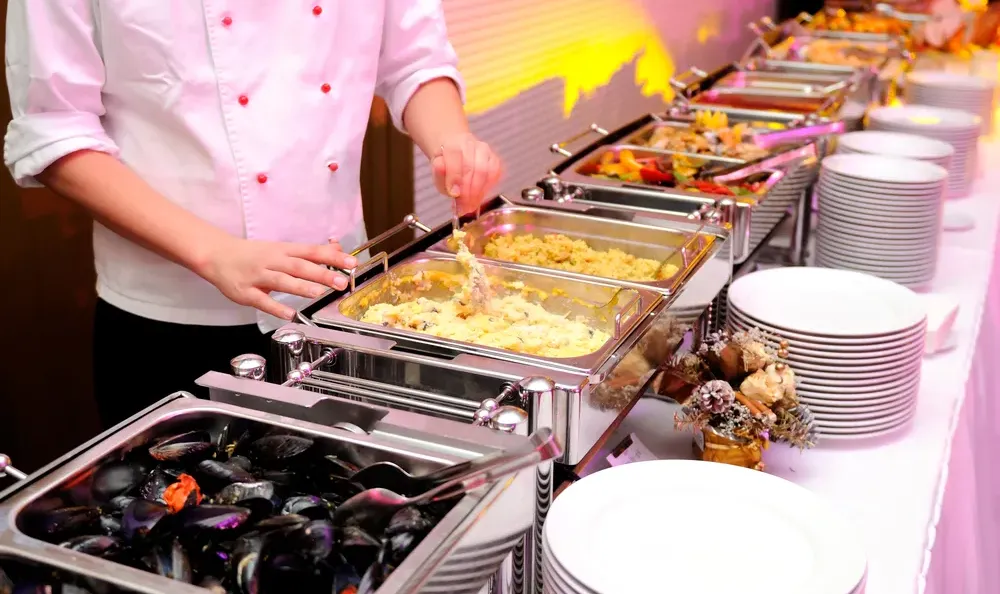
To effectively address how to reduce convention hotel catering expenses, one must first dismantle the multi-perspective misunderstanding that “cheaper food” is the primary lever. In the hierarchy of banquet costs, the raw ingredients often represent a smaller fraction of the final bill than the “triple-threat” of service charges, mandatory labor ratios, and administrative fees. A common oversimplification is the belief that a buffet is always more cost-effective than a plated meal. In reality, the high waste factor and uncontrolled portions of a buffet can frequently exceed the labor-intensive but precise portion control of a plated service.
Oversimplification also plagues the concept of “guarantees.” Many planners view the 72-hour guarantee as a clerical deadline, failing to realize it is a financial trap. If an organization over-guarantees by even 5%, the cumulative cost across a three-day summit can represent tens of thousands of dollars in “ghost meals.” The risk here is “Asymmetric Information”—the hotel knows exactly how much food they can produce with a 5% “over-set,” while the planner is often operating on outdated registration data.
A sophisticated approach requires looking at “Menu Engineering.” This is the practice of analyzing the profitability and popularity of menu items to steer the hotel’s chef toward preparations that utilize high-yield, seasonal ingredients that require less specialized labor. By understanding the hotel’s internal operational stressors, a planner can negotiate for a “Chef’s Choice” menu that offers a premium experience at a reduced rate because it aligns with the kitchen’s existing inventory and production schedule.
Historical and Systemic Evolution of Banquet Operations
The American banquet system was traditionally built on the “European Brigade” model—a rigid, highly specialized labor structure designed for formal service. In the mid-20th century, hotel catering was a profit center driven by prestige; menus were static, and the “convention” was a secondary consideration to the grand social gala. During this era, pricing was straightforward, and the concept of “service charges” was a modest percentage intended for the staff.
The 1990s introduced the “Mega-Convention” era, which forced hotels to industrialize their kitchens. This led to the rise of “Convenience Logistics”—pre-prepared, pre-cut, and pre-frozen components that reduced the need for skilled prep cooks but increased the baseline cost of goods. Simultaneously, hotels began utilizing catering as a primary driver of RevPAR (Revenue Per Available Room) recovery, leading to the “Compounding Fee” era where service charges, taxes, and “administrative fees” can now reach 35% or more of the total F&B spend.
Today, we are in the era of “Precision Catering.” Driven by data and a heightened focus on sustainability, the most efficient operations use real-time tracking of food consumption and waste. The systemic evolution has moved from “Abundance as a Metric of Success” to “Optimization as a Metric of Success.” Modern convention hotels are now more willing to collaborate on reduced-waste models, as it improves their own margins while meeting the client’s budgetary constraints.
Conceptual Frameworks for F&B Optimization
To navigate a banquet contract, planners should apply these specific mental models to evaluate every proposal.
1. The “Yield-to-Labor” Ratio
Every menu item should be evaluated by the labor required to serve it. A “DIY” taco bar or a “Grab-and-Go” station reduces the need for servers and bussers. If a menu item requires a “Uniformed Carver” or an “Action Station,” the planner must decide if the theatrical value justifies the $250+ per-hour labor surcharge.
2. The “Caloric Continuity” Model
This framework looks at the event as a single caloric cycle rather than isolated meals. If a heavy lunch is served, the afternoon break should be light and high-energy (e.g., fruit and nuts) rather than expensive pastries that will go uneaten. By smoothing out the “caloric peaks,” an organization avoids paying for food that attendees are too full to consume.
3. The “Standardization-at-Scale” Framework
This model prioritizes menus that utilize the same “base” ingredients across multiple days or multiple groups in the hotel. If the hotel has a 2,000-person wedding and a 500-person convention on the same day, choosing the same salad and starch as the wedding party gives the planner massive leverage to negotiate a “Shared Production” discount.
Key Categories of Catering Cost Drivers
Understanding where the money actually goes is the first step in reclaiming it.
| Cost Category | Typical Percentage | Variability | Negotiation Strategy |
| Raw Ingredients | 25% – 30% | High (Seasonal) | Use “Chef’s Choice” seasonal menus |
| Direct Labor | 20% – 25% | Low (Union-set) | Reduce “Active Stations” and carvers |
| Service Charges | 22% – 26% | Fixed | Clarify “Admin Fee” vs. “Gratuity” |
| Beverage Margin | 400% – 600% | High | Use “Consumption-based” pricing |
| Equipment/AV | 5% – 10% | Variable | Bundle with room rental |
Realistic Decision Logic: The “Beverage Pivot”
One of the most effective ways to how to reduce convention hotel catering expenses is to move from “Per Person/Per Hour” beverage packages to “Consumption-based” billing. For groups with a high percentage of non-drinkers or early-morning sessions, paying for the actual bottles opened—rather than a flat rate for the entire crowd—can save 30-50% on the final bar bill.
Detailed Real-World Scenarios
Scenario 1: The “Break” Overrun
An organization is hosting a 4-day summit with two coffee breaks per day for 1,000 people.
-
The Failure: They order the “Continental Breakfast” and “Afternoon Energizer” packages as listed in the brochure.
-
The Result: Total cost is $120,000. 40% of the pastries and 30% of the coffee are thrown away each day.
-
The Fix: Switching to “Gallon-based” coffee pricing and “Piece-based” fruit and pastry ordering. By tracking the first day’s consumption, they reduced the quantities by 25% for the remaining three days, saving $30,000.
Scenario 2: The “Over-Set” Opportunity
A corporate group guarantees 500 people for a plated dinner.
-
The Constraint: The hotel’s policy is to “set” for 5% over the guarantee (525 seats).
-
The Strategy: The planner negotiates to have the 5% “over-set” placed in the back of the room without preset salads or desserts.
-
Second-Order Effect: If the “no-show” rate is high, the hotel doesn’t prep those 25 extra plates of expensive protein, allowing the planner to negotiate a credit or avoid paying for the full over-set if not used.
Planning, Cost, and Resource Dynamics
The lifecycle of catering spend starts at the RFP stage. If you wait until the menu selection phase to negotiate prices, you have already lost your leverage.
Range-Based Resource Comparison Table
| Item | Standard Brochure Price | Optimized Contracted Price | Strategy |
| Coffee (per gallon) | $95 – $125 | $75 – $85 | Negotiate “locked” price in contract |
| Plated Lunch | $65 – $85 | $50 – $60 | Limit to 2 courses; pre-set salad |
| Continental Breakfast | $45 | $32 | Focus on protein; remove expensive juices |
| AV for Catering | $250/screen | Included | Negotiate as part of “Room Hire” |
The Opportunity Cost of Complexity is a significant factor. A menu with three different protein choices requires three times the prep, three times the tracking, and significantly more “buffer” in the kitchen. Moving to a “Single Protein with a Vegetarian Option” is the single most effective way to lower the base price per head.
Strategic Tools and Support Systems
A high-level editorial approach to catering involves using these tools to manage the hotel relationship:
-
Historical Consumption Data: Do not rely on the hotel’s “standard” estimates. Bring your own data from previous years to prove that your group drinks 0.8 cups of coffee per person, not 1.5.
-
Consumption-Based Billing: A contractual requirement to pay for actual units used (gallons, bottles, pieces) rather than flat-rate packages.
-
Menu “Ghosting” Analysis: Requesting the hotel’s “B-List” menus—those that are not in the marketing glossies but utilize high-volume, lower-cost inventory.
-
Labor-to-Guest Ratios: Negotiating the number of servers. If the hotel’s standard is 1 per 20 guests, ask if 1 per 30 is feasible for a buffet.
-
The “Water Station” Strategy: Replacing $8 individual bottled waters with high-end infused water stations (cucumber/mint) which cost pennies but feel more premium.
-
Digital Guarantee Submission: Using a shared dashboard to update guarantees up to the 48-hour mark to reflect last-minute registration cancellations.
Risk Landscape and Failure Modes
Reducing costs carries inherent risks that must be balanced against the attendee’s perception of “Quality.”
-
The “Hunger” Backlash: If quantities are cut too aggressively, the first people in line will eat well while the last 10% find empty platters. This is a “Lagging Indicator” of failure.
-
The “Dietary” Compounding Risk: With 15-20% of modern attendees having special dietary needs (GF, Vegan, Nut-free), failing to account for these in the “base” menu creates expensive “Special Order” charges at the table.
-
The “Service Lag”: Cutting labor too thin results in dirty plates sitting on tables and long coffee lines, which derails the event schedule.
-
The “Hidden Surcharge” Trap: Many hotels will offer a lower “base price” but then add “Chef’s Fees,” “Small Group Fees,” or “Late Guarantee Fees” that negate the savings.
Governance, Maintenance, and Long-Term Adaptation
Organizations should treat their catering spend as a “Continuous Improvement” project.
-
The Post-Event Culinary Audit: Meet with the banquet captain immediately after the event. Ask for the “Waste Log.” Which items were untouched? Which disappeared in minutes?
-
Layered Review Checklist:
-
[ ] Compare the “Pro-Forma” invoice with the final bill for “Service Charge” accuracy.
-
[ ] Check if “Comp” items were applied correctly (e.g., 1 per 50).
-
[ ] Audit the beverage “Open Count” versus “Close Count” for consumption billing.
-
[ ] Review attendee feedback specifically regarding “Food Availability” vs. “Food Quality.”
-
Measurement, Tracking, and Evaluation
How do you prove the strategy worked?
-
Leading Indicator: “Menu Alignment.” The percentage of menu items that utilize seasonal or shared ingredients.
-
Qualitative Signal: “Plate Waste.” A visual audit of the busing stations. If 30% of the dessert is coming back to the kitchen, the item was either too large or of poor quality.
-
Quantitative Signal: “Price Per Attendee Day” (PPAD). The total F&B spend divided by the total “attendee days.” If the PPAD is dropping while sentiment scores are steady, the strategy is a success.
Common Misconceptions and Oversimplifications
-
“Buffets are cheaper.” Correction: Buffets require 20-30% more food to look “full” and have significantly higher waste. Plated is often cheaper at scale.
-
“Chicken is the cheapest protein.” Correction: In some markets, local pork or sustainable whitefish can be more cost-effective and feel more “premium.”
-
“We have to follow the menu prices.” Correction: Banquet menus are starting points for negotiation, not fixed price lists.
-
“Bottled water is necessary for speed.” Correction: Infused water stations with compostable cups are faster and 90% cheaper.
-
“The service charge goes to the waiter.” Correction: In many hotels, the “Service Charge” or “Admin Fee” is kept by the house to cover overhead. Ask for a breakdown.
-
“Planners can’t see the kitchen.” Correction: A site visit should always include the banquet kitchen. A clean, organized kitchen has less waste and better portion control.
-
“Breakfast is the least important meal.” Correction: A poor breakfast sets a negative tone for the entire day. It is better to have a high-quality “Light Breakfast” than a low-quality “Full Hot Breakfast.”
Ethical and Practical Considerations
In a world increasingly focused on ESG (Environmental, Social, and Governance) goals, reducing catering expenses must align with “Sustainable Sourcing.” A “Cheap” menu often relies on industrial farming practices that may conflict with an organization’s mission. Furthermore, “Food Waste Diversion”—donating untouched meals to local shelters—is not just an ethical imperative but a practical one, as many cities now offer tax credits or fee waivers for hotels that reduce their landfill contributions. The most sophisticated “Cost Reduction” plans are those that view “Waste” as a financial and moral failure.
Synthesis and Editorial Conclusion
The mastery of how to reduce convention hotel catering expenses is found in the transition from “Ordering” to “Engineering.” It requires an analytical mindset that views the banquet floor as a production environment and the attendee as a participant in a caloric ecosystem. By focusing on labor-efficient menus, consumption-based billing, and precision guarantees, an organization can reclaim significant portions of its budget without sacrificing the “hospitality” that is the hallmark of a successful summit.
Ultimately, the goal is “Frictionless Nourishment.” When food service is well-executed, it remains invisible, providing the energy required for the event’s high-value networking and content. When it is poorly executed—either through excessive waste or visible scarcity—it becomes a distraction. The premier event strategist is the one who understands that the “Value” of a meal is not found in the price of the filet mignon, but in the efficiency with which that meal supports the event’s broader strategic objectives.