Best Convention Hotel for Product Launches: The Editorial Guide
The orchestration of a major product unveiling is an exercise in high-stakes atmospheric control. Unlike a standard corporate association meeting or a recurring industry trade show, a product launch is a singular “moment of truth” where the physical environment must act as a seamless extension of the brand’s narrative. The venue is not merely a container for people; it is the primary physical interface through which the media, stakeholders, and early adopters experience the innovation. Selecting the correct architecture for this purpose requires a departure from traditional hospitality metrics in favor of theatrical and logistical precision.
In the current landscape of the mid-2020s, the “Launch Venue” has evolved into a hyper-connected media studio. The shift toward hybrid experiences means the chosen facility must simultaneously accommodate the tactile needs of an in-person audience and the high-fidelity broadcasting requirements of a global digital viewership. This duality creates a unique set of stresses on a hotel’s infrastructure, demanding a level of power redundancy and bandwidth capacity that would be overkill for almost any other type of event. The margin for error is non-existent; a ten-second flicker in the house lights during a CEO’s keynote is not just a glitch—it is a permanent blemish on the product’s digital history.
To navigate the complexities of this selection process, one must view the hotel as a “Machine for Engagement.” This involves a forensic analysis of the property’s “Back-of-House” (BOH) capabilities, its “Sensory Isolation” properties, and its ability to maintain a strictly controlled aesthetic environment. The following analysis serves as a definitive framework for identifying and auditing the premier assets designed to support the specific, high-velocity demands of modern product debuts.
Understanding “best convention hotel for product launches”
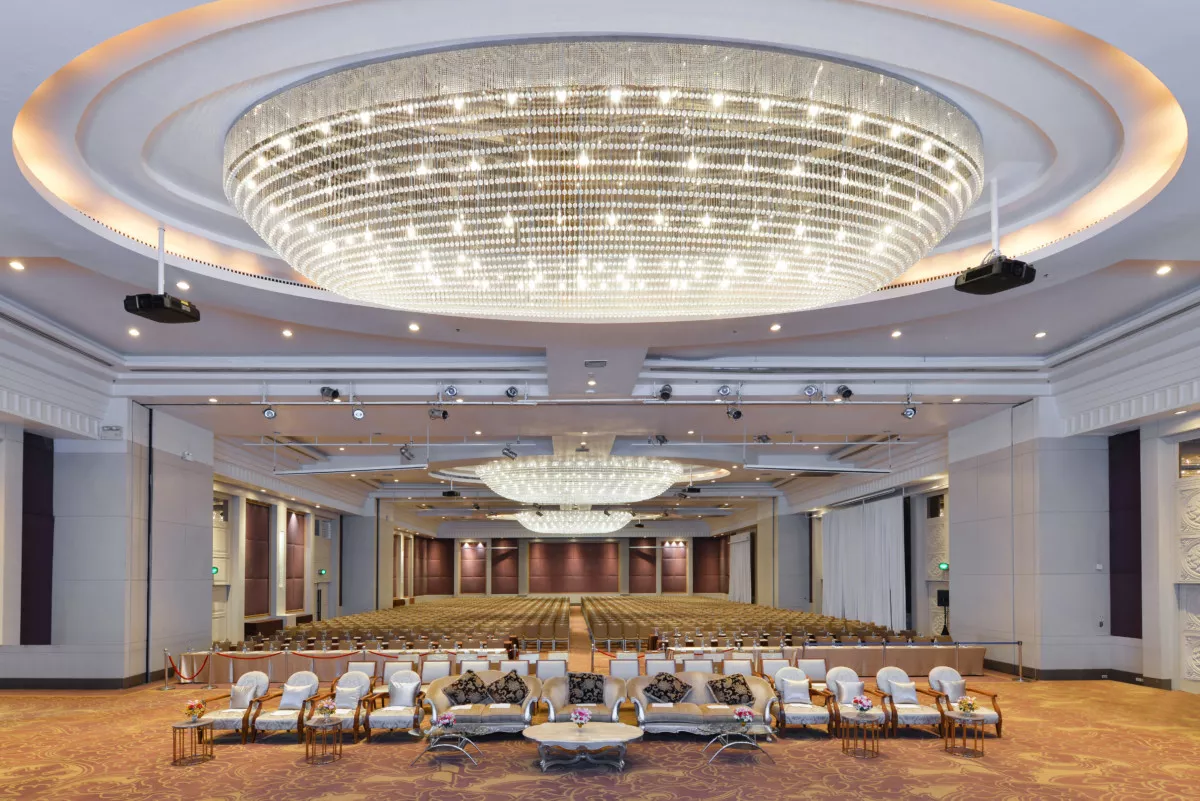
Identifying the best convention hotel for product launches requires a rejection of the “square-footage-first” mentality. While massive halls provide scale, the launch of a new vehicle, software suite, or luxury consumer good often prioritizes “Theatrical Density” over pure capacity. A common misunderstanding in site selection is the assumption that a “Luxury” hotel is inherently a “Launch” hotel. In reality, a property may have a stunning five-diamond lobby but possess a loading dock that cannot accommodate the dimensions of a high-resolution LED wall or a prototype vehicle.
From a multi-perspective view, the ideal launch facility must balance “Privacy Sovereignty” with “Media Reach.”For the marketing team, the priority is “Instagrammable Frictionless-ness”—the ability of the venue to provide high-quality natural light, branded “Third Places,” and high-speed upload speeds for content creators. When these perspectives clash, it is the facility’s internal logic and flexibility that determine the success of the outcome.
Oversimplification risks often manifest in the “AV Concession” model. Many planners fail to realize that a hotel’s “In-House AV” is frequently a third-party profit center rather than a technical partner. Truly elite properties understand that for a product reveal, the hotel is a “White Label” asset that must disappear behind the brand identity of the guest organization.
The Historical Transition: From Ballroom to Broadcast Center
The evolution of the launch venue reflects the broader industrialization of attention. In the mid-20th century, a product launch was a “Social Spectacle.” Properties like the grand hotels of New York or London provided the backdrop for the unveiling of new fashion lines or consumer electronics, but the “audience” was strictly local. The architecture was vertical, formal, and static. The primary logistical challenge was the “Grand Entrance”—moving a physical object onto a stage under a chandelier.
The 1990s and 2000s saw the rise of the “Silicon Valley Style” launch, which demanded an industrial, “Black Box” environment. This pushed the market toward newer, suburban-adjacent convention resorts that could provide massive, clear-span floors and high-voltage power grids. During this era, the hotel became a “Utility,” where the emphasis was on “Throughput”—moving thousands of people in and out of a plenary session as efficiently as possible.
Today, we are in the era of the “Integrated Media Campus.” The modern launch hotel is a “Hybrid Hub” that treats the physical attendee and the remote viewer as equal participants. This has led to the redesign of “Pre-Function” spaces into “Social Content Studios” and the integration of biophilic design to keep attendees energized during long multi-track events. The hotel is no longer just a place to hold a meeting; it is a permanent infrastructure for the generation of brand-specific digital media.
Conceptual Frameworks: The Architecture of the Unveil
To audit a property’s “Launch Readiness,” one should apply these three core mental models.
1. The “Dock-to-Stage” Latency Framework
This measures the logistical friction of the “Load-in.” If the dock is a mile from the ballroom, the labor costs for the load-in will escalate exponentially.
2. The “Acoustic Sovereignty” Model
A product launch often involves high-decibel sound checks and high-fidelity audio during the reveal. This framework audits the “Isolation Integrity” of the venue. A “Top” facility ensures that the sound of a roaring jet engine in the main hall does not bleed into the quiet VIP interviews happening in the breakout suites. This requires “Gasketed” air-walls and decoupled flooring systems.
3. The “Power Redundancy” Perimeter
This model evaluates the facility’s ability to survive a “Local Grid Failure.” For a launch, the power requirement is asymmetrical—the stage lighting and server racks need 10x the power of the rest of the hotel combined. An elite facility provides “Dedicated Clean Power” for the stage, isolated from the HVAC and elevator circuits to prevent electrical “noise” or sudden spikes.
Key Categories and Technical Variations
The selection of a “Best” venue is dependent on the “Industrial Profile” of the product.
| Category | Primary Benefit | Functional Trade-off | Ideal Product Type |
| The Urban High-Res Center | Central media access | Limited dock space | Software / FinTech |
| The Self-Contained Resort | “Captured Audience” | Higher travel logistics | Pharma / Multi-day summits |
| The Industrial Hub | Huge floor loads; high ceilings | Less “Boutique” feel | Automotive / Heavy Tech |
| The Boutique Luxury Enclave | High prestige; intimacy | Limited technical scale | Jewelry / Luxury Fashion |
| The Tech-Forward Campus | Integrated 5G; AI concierge | Can feel impersonal | Consumer Electronics |
Decision Logic: The “Aesthetic-to-Asset” Ratio
If the product is a “Lifestyle” asset (e.g., a new wearable), the Boutique Luxury Enclave is superior because the hotel’s existing decor adds value to the brand. If the product is “Technical” (e.g., a new server architecture), an Industrial Hub or Tech-Forward Campus is better, as it allows the production team to build a custom environment from scratch without the hotel’s “personality” interfering.
Detailed Real-World Scenarios
Scenario 1: The “Prototype Security” Breach
A major smartphone manufacturer is using a high-end urban hotel for a pre-launch partner meeting.
-
The Failure Mode: The hotel’s service elevators are shared between the kitchen staff and the event vendors. A staff member snaps a photo of the prototype being moved in a “non-secure” cart.
-
The Solution: An elite launch venue provides “Dedicated Secure Corridors” and private elevators that are keyed only for the event security team.
-
Result: The “Reveal” is preserved, and the brand maintains its marketing leverage.
Scenario 2: The “Bandwidth Blackout”
A gaming company launches a new cloud-based platform and invites 500 influencers to “Live Test” the system simultaneously.
-
The Constraint: Each influencer is streaming in 4K. The combined demand is 50Gbps.
-
The Failure Mode: The hotel’s “Standard Business Wi-Fi” caps at 10Gbps, causing the stream to buffer and the “Live Experience” to fail.
-
The Mitigation: A premier launch hotel has “Dark Fiber” access and can “Burst” its bandwidth specifically for the event duration.
Planning, Cost, and Resource Dynamics
The “Sticker Price” of a launch venue is almost always a fraction of the “Total Operational Cost.”
Range-Based Resource Dynamics Table
| Expense Pillar | Standard “Corporate” Rate | “Launch Tier” Premium | Strategic Logic |
| Rigging Points (Per Point) | $150 – $300 | $500 – $1,200 | High-load points for heavy sets |
| Electrical (Per Drop) | $80 – $200 | $500 – $1,500 | Includes “Clean Power” backup |
| Bandwidth (Per Day) | $5k – $15k | $40k – $100k+ | Guaranteed up-time/dedicated VLAN |
| Security (Per Hour) | $45 – $75 | $120 – $250 | Specialized TSCM / IP protection |
Opportunity Cost of Venue “Friction”: If a loading dock is too small and forces a 24-hour extension of the load-in, the extra day of “Room Block” and “Labor” can easily add $250k to a mid-sized launch budget.
Tools, Strategies, and Support Systems
To manage an elite launch, the strategist must employ a “Technical Layer” of support.
-
3D LiDAR Room Scanning: Using LiDAR to map the ballroom to the millimeter, ensuring that the pre-built sets will fit without “on-site surgery.”
-
RF Spectrum Analysis: A “Pre-Event Sweep” to identify interference from neighboring buildings that might disrupt the launch’s wireless microphones or prototype controllers.
-
The “Shadow” Catering Strategy: Providing high-quality food to the production crew in the BOH area to ensure the technical team remains focused and energized during the 48-hour “Tech-In.”
-
Integrated Command Centers: A “Room within a Room” for the marketing team to monitor social sentiment in real-time as the keynote progresses.
-
Biometric Credentialing: Moving beyond plastic badges to facial recognition for “Inner Circle” access to the prototype room.
-
Zonal HVAC Over-Cooling: “Pre-cooling” the ballroom by 10 degrees before the doors open to compensate for the massive heat-load generated by LED walls and 1,000 human bodies.
Risk Landscape and Systemic Resilience
In the context of the best convention hotel for product launches, risk is a “Compounding Variable.”
-
The “Vertical Transportation” Bottleneck: In a high-rise urban hotel, if two elevators go “Out of Service” on launch morning, 20% of your audience will be late for the opening video.
-
The “Labor Disruption” Variable: In union-dense markets, a “work-to-rule” action at the loading dock can hold a launch hostage. Planners must audit the hotel’s labor relations as part of the RFP.
-
The “Atmospheric Integrity” Failure: If the hotel is hosting a wedding or a loud social party in the adjacent ballroom, the “Executive Vibe” of the launch is compromised. The “No-Competing-Event” clause is the most important legal protection in a launch contract.
Governance, Maintenance, and Adaptation
A premier launch facility requires a “Maintenance Cycle” that mirrors the speed of the tech industry.
-
The “CapEx” Schedule Audit: Before booking, the planner should ask for the last “Network Backbone Refresh” date. If the hotel hasn’t updated its switches and fiber in 3 years, it is no longer a “Top Tier” launch venue.
-
The “Continuous Review” Checklist:
-
[ ] Verification of the current “Fire Marshal” capacity for “Darkened Room” sessions.
-
[ ] Audit of the “Service Elevator” weight limits for heavy production gear.
-
[ ] Confirmation of “Roof Access” for satellite or 5G “Small Cell” deployments.
-
[ ] Testing of the “Emergency Cut-over” time for the backup power system.
-
Measurement, Tracking, and Evaluation
The ROI of a launch venue is measured by “Data Integrity” and “Social Resonance.”
-
Leading Indicator: “The Latency Log.” Reviewing the network logs to see if there were any “packet drops” during the live keynote.
-
Quantitative Metric: “Content Velocity.” The time it takes for the first attendee-generated 4K video to be uploaded and indexed.
-
Qualitative Signal: “The Sensory Survey.” Asking attendees: “Did the environment feel like the [Product Name]?”
Common Misconceptions and Oversimplifications
-
“High-ceiling rooms are just for looks.” Correction: They are for “Projection Angles” and “Light Dispersion.” Low ceilings create “Hot Spots” and kill the theatrical depth.
-
“We can just use the house internet.” Correction: House internet is shared with 2,000 guests watching Netflix. You need a “Dedicated Virtual Local Area Network (VLAN).”
-
“All loading docks are standard.” Correction: Some docks have a “tight turn” that a 53-foot production trailer cannot make.
-
“The hotel’s ‘AV Partner’ is the expert.” Correction: They are often experts in projectors, not world-class production. You need an external partner for a launch.
-
“A ‘Modern’ hotel is tech-ready.” Correction: Sometimes “Modern” means they removed the floor-boxes to make the carpet look better, leaving you with no power for your pedestals.
-
“Room Service is fine for the crew.” Correction: Room service is too slow for a “Load-in” schedule. You need a dedicated BOH buffet.
-
“We don’t need a site visit if we have the PDF.” Correction: PDFs don’t show the “Pillar Obstructions” or the “Buzzing” of the HVAC system.
-
“The Sales Manager is in charge.” Correction: The “Director of Engineering” and the “Dock Master” are the ones who determine if your launch actually happens.
Ethical and Practical Considerations
In the modern era, a best convention hotel for product launches must align with the “Values of the Innovation.” Furthermore, the ethical treatment of the “Invisible Labor”—the stagehands, the cleaners, and the banquet staff—is increasingly under the microscope of the media. A launch that succeeds at the expense of local labor stability is a reputational risk.
Synthesis and Editorial Conclusion
The selection of a product launch venue is an act of “Strategic Environment Building.” It is the moment where the abstract brand becomes a physical reality. The most successful launches are those where the hotel acts as a “Force Multiplier,” providing the silent, high-performance infrastructure that allows the product to take center stage.
For the planner, mastery in this field is found in the “Forensic Audit”—the ability to look past the velvet curtains and into the “Mechanical Guts” of the property. In a world where every reveal is broadcast to a global audience of millions, the venue is no longer just a room; it is the “Physical Engine” of the brand’s future.